
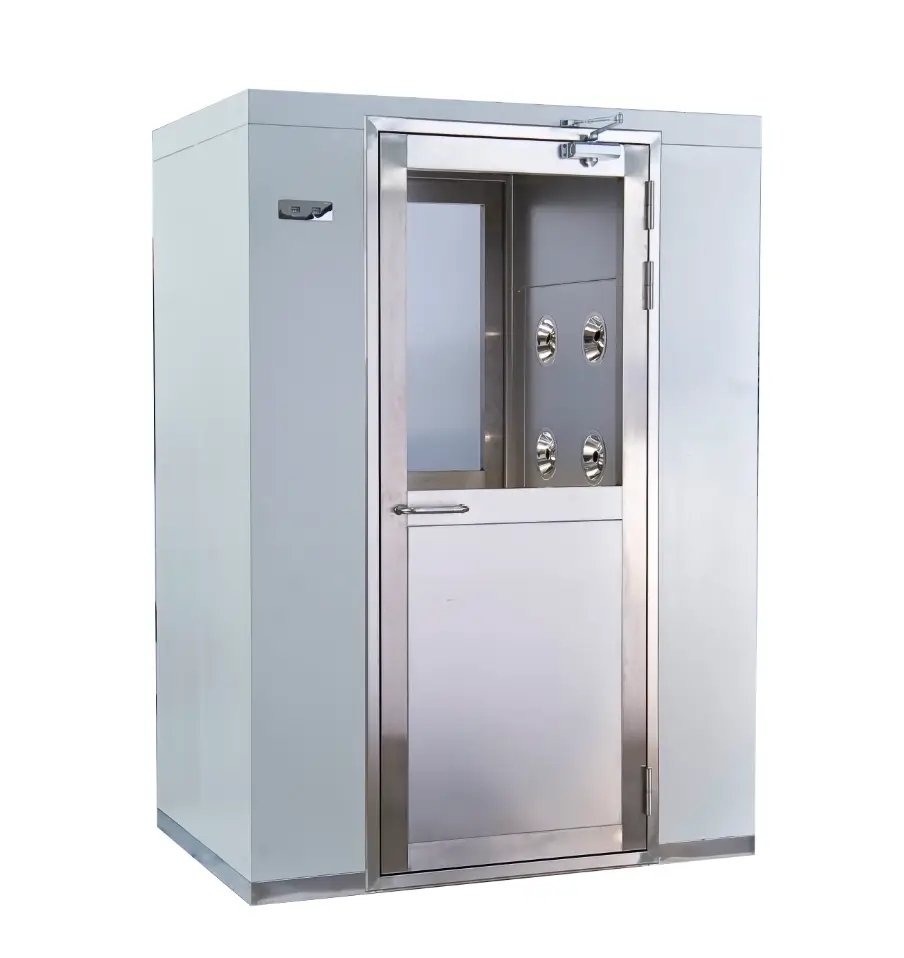
An air shower is a self-contained, interlocked passageway for the decontamination of personnel or materials installed at the entrance to controlled environments, such as cleanrooms and biosafety facilities. It uses high-velocity air jets filtered by HEPA or ULPA to dislodge and remove particulate contamination from clothing, equipment, and surfaces before entry or exit.
According to Cleanroom Technology: Fundamentals of Design, Testing and Operation (Wiley, 2nd edition, 2010) by William Whyte, personnel are the single largest source of viable and non-viable particle generation within a cleanroom. This makes effective decontamination at the entry boundary a prerequisite for maintaining the prescribed ISO 14644-1 particle concentration levels. ISO 14644-1:2015 (Cleanrooms and Associated Controlled Environments — Part 1: Classification of Air Cleanliness by Particle Concentration), air showers are specified within a classification framework. Higher cleanroom classes (ISO 4–6) demand stricter entry decontamination protocols, which air showers are engineered to satisfy.
Introduction: The Contamination Control Problem Air Showers Solve
Maintaining a cleanroom is not fundamentally a filtration problem; it is a boundary problem. A well-designed HVAC system for cleanrooms can reliably deliver ISO Class 5 or Class 6 air quality to every cubic foot of the controlled environment. However, no recirculation system can compensate for the continuous introduction of contamination each time a person or material crosses the threshold. A person walking at a normal pace generates between 100,000 and 1,000,000 particles per minute (≥0.3 µm) through skin shedding, clothing fibre release and respiratory output, as documented in Whyte’s foundational work and consistently reproduced in cleanroom validation studies. In an ISO Class 5 cleanroom, the permissible particle concentration is just 3,520 particles per cubic metre at ≥0.5 µm. The arithmetic is stark: uncontrolled personnel entry would violate the classification limits of a Class 5 space within seconds of a person entering without decontaminating themselves.
The air shower has been specifically engineered to address this boundary challenge. Positioned as an interlocked antechamber between the uncontrolled corridor and the cleanroom entry point, it functions as a decontamination airlock. The occupant enters and both doors interlock to prevent them from being opened simultaneously (which would allow unfiltered corridor air to bypass the decontamination stage entirely). The air shower cycle then runs for a timed duration — typically 15 to 30 seconds — during which high-velocity filtered air jets remove surface contamination from the occupant’s clothing and exposed body parts. The removed particles are captured by the return air filtration system, rather than being allowed to accumulate in the room. According to technical data cited in the IEST Contamination Control Glossary (IEST-G-CC1001), this single intervention can reduce the particle burden carried into a cleanroom by 70–99%, depending on the jet velocity, cycle duration, nozzle geometry, and the nature of the contamination.
Working Principle: The Physics of Particle Removal
The decontamination mechanism of an air shower does not involve conventional filtration — instead, it uses aerodynamic detachment. Particles adhering to fabric, garment surfaces, or equipment are held in place by a combination of adhesion forces, such as electrostatic attraction, van der Waals forces, and mechanical lodging within fibre interstices. To dislodge these particles, a force exceeding the sum of these adhesion forces must be applied — and high-velocity impinging air jets are the practical engineering solution that achieves this within a passageway format.
Air shower nozzles are designed to produce focused, turbulent air jets at typical velocities of between 20 and 25 m/s (approximately 65–82 ft/s) at the nozzle outlet. When these jets impinge on the garment surface, they create localised pressure differentials and boundary layer disruption across the fabric. The combination of direct impact pressure and turbulent shear forces in the jet’s outer mixing layer dislodges particles from the fibre matrix. The released particles are then entrained in the return airflow, drawn back through low-wall return grilles and captured by the pre-filter and HEPA/ULPA filter bank, after which the air is recirculated through the nozzles. This means the air shower operates as a closed-loop decontamination system, permanently capturing the dislodged contamination rather than simply redistributing it within the chamber.
The effectiveness of this aerodynamic detachment process depends on three interrelated variables. First, jet velocity: below approximately 18 m/s, removal efficiency for particles larger than 5 µm drops sharply, as the aerodynamic forces are insufficient to overcome adhesion on tightly woven garment materials. Second, nozzle coverage geometry: the nozzles must collectively produce overlapping jet coverage across the full frontal and rear surfaces of the occupant, which is why air showers typically incorporate nozzles on both side walls and sometimes on the ceiling. Third, cycle duration: a minimum of 15 seconds is required for a single full rotation and coverage pass; most manufacturers recommend 20–30 seconds for Class 6 and higher applications, with cycle times up to 60 seconds specified for applications involving heavy contamination loads in pharmaceutical Grade B or ISO Class 5 environments.
Air Shower Performance Parameters by Cleanroom Class
| ISO Class 8 | Grade D | 18–20 m/s | 15 seconds | H13 HEPA (99.95%) | Electronics assembly, general pharma packaging |
| ISO Class 7 | Grade C | 20–23 m/s | 20 seconds | H14 HEPA (99.995%) | Compounding, medical device assembly |
| ISO Class 6 | Grade B (background) | 22–25 m/s | 25–30 seconds | H14 HEPA (99.995%) | Aseptic filling background, semiconductor |
| ISO Class 5 | Grade A (background) / BSL-2 | 23–25 m/s | 30 seconds | U15 ULPA (99.9995%) | Critical pharma, optical, life sciences |
| ISO Class 4 and below | Grade A / BSL-3 | 25 m/s+ | 30–60 seconds | U16–U17 ULPA | Research, nanotechnology, military applications |
Core Components and Their Functional Roles
The effectiveness of the air shower’s engineering depends on the precise interaction of its five core subsystems, each of which must be correctly specified for the target cleanroom class and application environment.
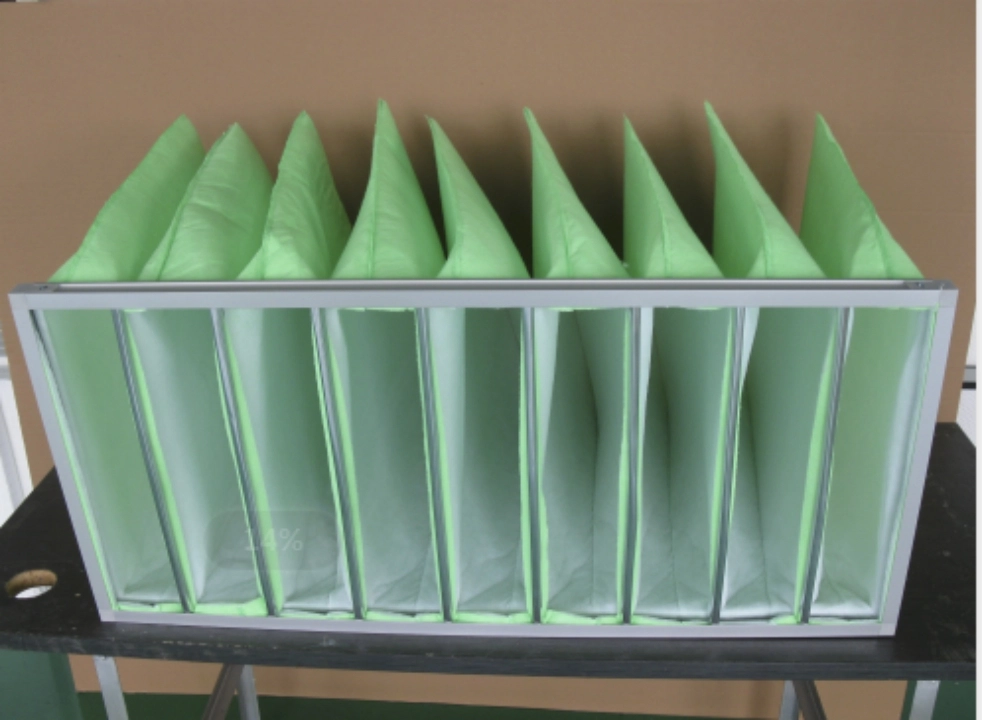
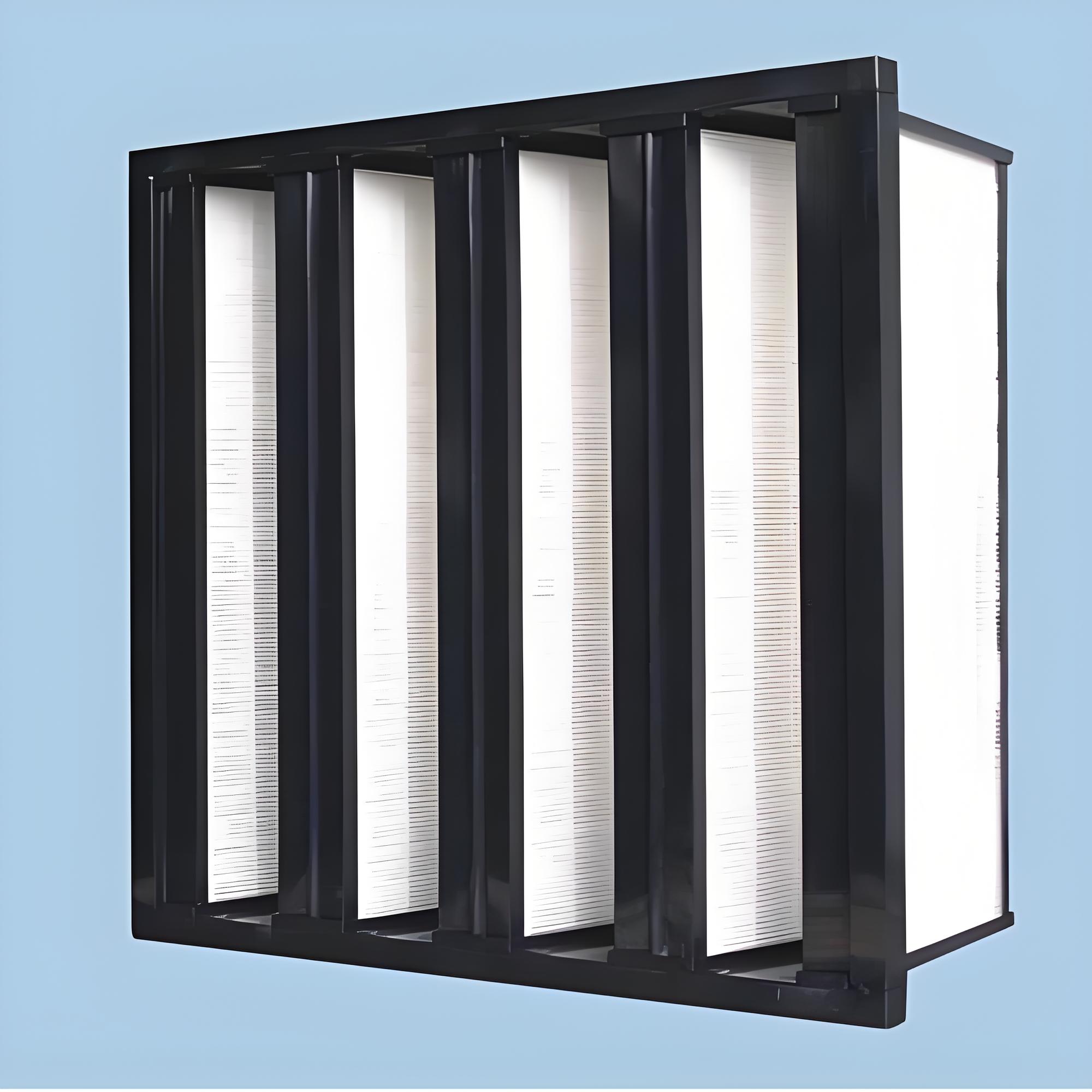
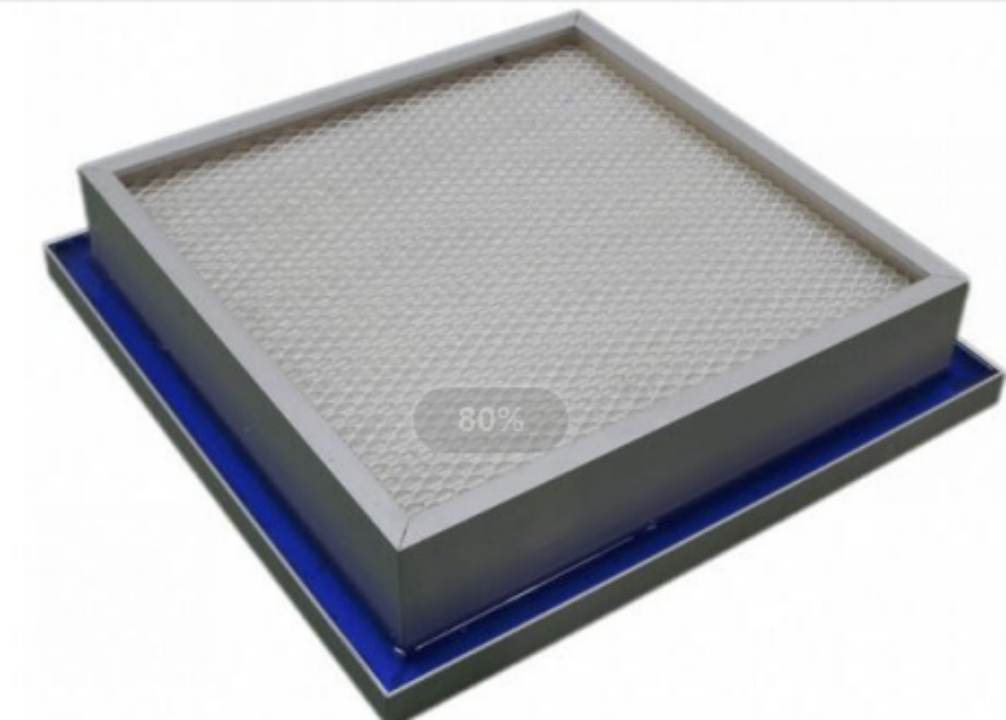
The HEPA/ULPA filter bank forms the basis of the air quality of the entire unit. H13-grade HEPA filters (EN 1822-1:2019 classification) capture 99.95% of particles at the most penetrating particle size (MPPS, typically 0.1–0.3 µm), while H14 filters capture 99.995%. ULPA filters of grades U15–U17 extend this to 99.9995–99.99995%. The filter selection must match the ISO classification of the receiving cleanroom. For example, installing an H13 unit to feed an ISO Class 5 room would defeat the purpose of the decontamination step, as the air shower would introduce particles at concentrations that are incompatible with the room’s operational limits. Filter integrity testing using sodium chloride aerosol or polyalphaolefin (PAO) challenge in accordance with EN 1822 and ISO 29463 is performed at commissioning and repeated at intervals specified by the facility’s contamination control plan.
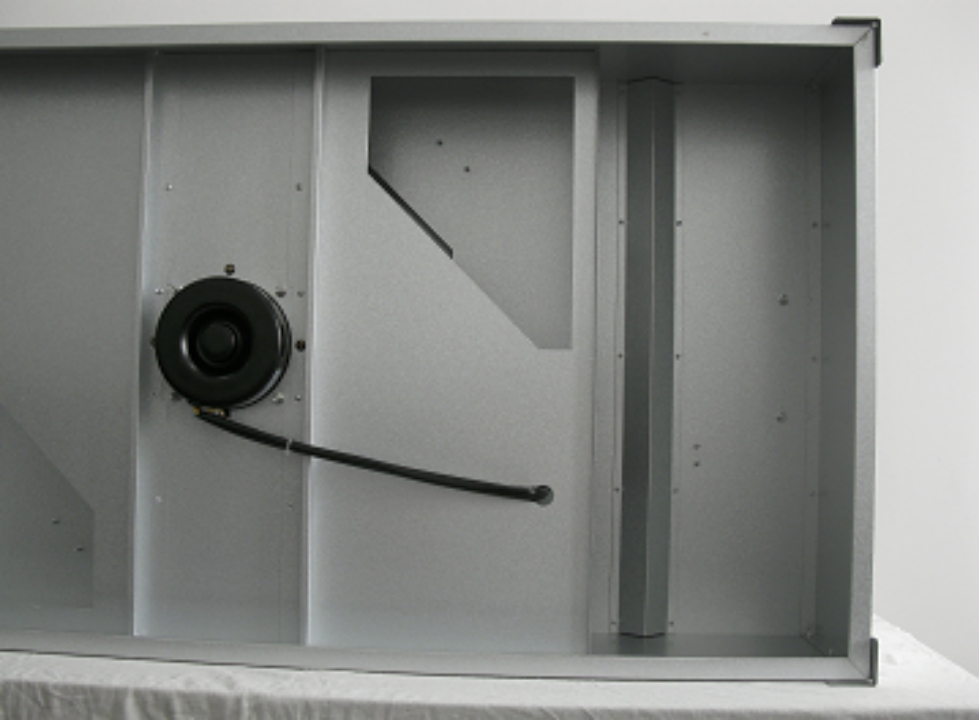
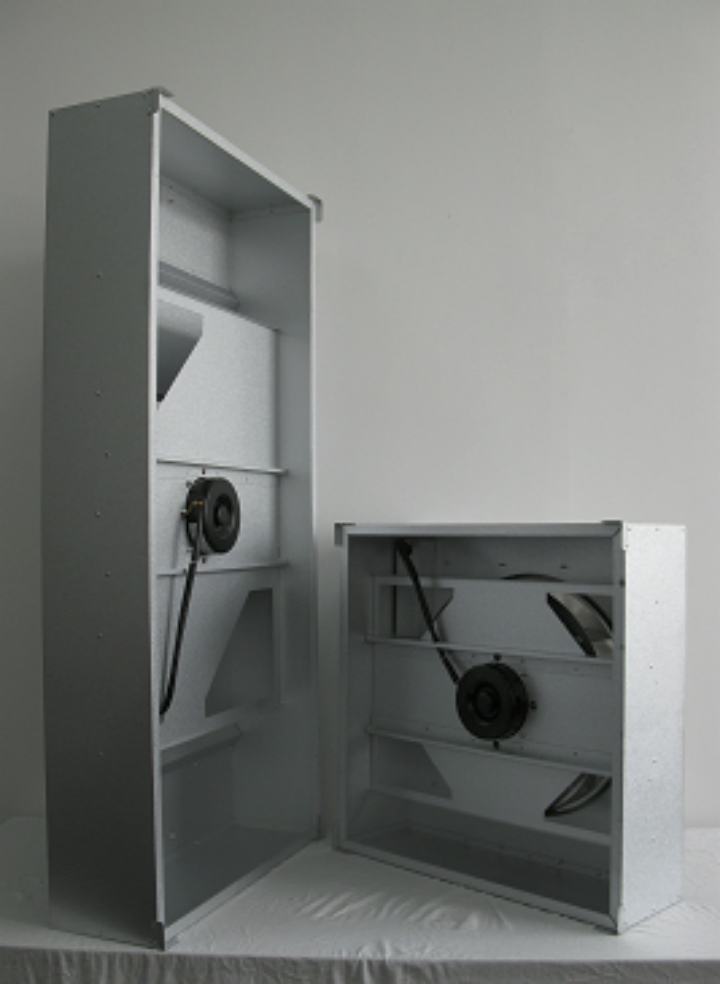
The centrifugal blower and nozzle array together define the air shower’s hydrodynamic performance. Industrial-grade centrifugal fans — rated at 750–2,200 W depending on chamber volume — generate the pressure head required to drive air through the filter media and deliver the specified jet velocity at each nozzle outlet. Nozzles are positioned on both side walls in alternating vertical banks, with angles typically set between 15° and 30° from perpendicular to maximize surface coverage and minimize dead zones in the garment fabric. Premium designs incorporate ceiling-mounted nozzles to address top-of-head and shoulder contamination — areas that lateral wall nozzles cannot reliably reach with sufficient velocity at distance.
The interlock control system is the safety-critical element that prevents the air shower from being bypassed — intentionally or accidentally — by simultaneous opening of entry and exit doors. Electromechanical interlocks, typically backed by a programmable logic controller (PLC) or a dedicated HVAC controller with alarm output capability, ensure that the exit door cannot release until the timed cycle has completed and the inlet door has been confirmed closed. Advanced systems include magnetic door seals, occupancy sensors that detect early exit attempts and restart the cycle, and data-logging outputs compatible with cleanroom facility management systems for GMP audit trail documentation.
The pre-filter stage — typically an EU4 or G4 coarse filter — extends the operational life of the expensive main HEPA/ULPA bank by capturing larger particles (>10 µm) before they load the fine filter. Without a functional pre-filter stage, HEPA filter service intervals in high-traffic air showers shorten dramatically, increasing both operating costs and the frequency of system downtime for maintenance.
The chamber enclosure itself is a functional component: smooth, non-particle-shedding interior surfaces (typically powder-coated or stainless steel-clad panels with sealed joints) prevent particle accumulation in dead zones that would re-contaminate personnel during subsequent cycles. Floor construction typically incorporates anti-static properties to dissipate electrostatic charge that would otherwise attract particles to garment surfaces just after the blow-off cycle completes.
Types of Air Showers and Selection Criteria
Air showers are available in configurations ranging from single-person walk-through tunnel units to large-format material and equipment pass-through chambers, and the correct selection depends on the throughput requirements, physical dimensions of personnel or cargo, and the cleanroom’s ISO classification target.
Single-person tunnel air showers are the standard configuration for personnel entry in most ISO Class 6–8 facilities. They accommodate one person standing in the chamber with arms slightly raised to expose maximum garment surface area to the jet array. Standard internal dimensions are approximately 1,000 mm (W) × 1,000 mm (D) × 2,100 mm (H), and cycle times of 15–30 seconds support a throughput of approximately 2–4 persons per minute at peak shift change — a figure that facility planners must verify against maximum entry traffic rates to avoid queue buildup that incentivizes bypassing the decontamination protocol.
Dual-person or family-size air showers (typically 1,400–1,600 mm wide) accommodate two occupants simultaneously and are specified where higher throughput is required without the capital cost and footprint of two parallel single units. The effectiveness per occupant is slightly lower due to jet coverage sharing, and they are generally not recommended for ISO Class 5 or stricter applications.
Cargo and equipment air showers — sometimes called material air showers or pass-through air showers — are sized to accommodate trolleys, pallet loads, or large equipment and are fundamental in facilities where material entry is as frequent as personnel entry. They operate on the same HEPA-filtered high-velocity jet principle but with chamber dimensions up to 3,000 mm (W) × 3,000 mm (D) or larger, and their filter and blower specifications must account for the much larger surface area and more complex aerodynamic geometry of irregular cargo loads.
Air Shower Types: Configuration Comparison
| Single-person tunnel | ~1,000 mm | ISO Class 5–8 | 2–4 persons/min | Standard personnel decontamination |
| Dual-person / family | ~1,400–1,600 mm | ISO Class 6–8 | 3–5 persons/min | Higher throughput; slightly lower per-person efficiency |
| L-shaped / corner entry | Custom | ISO Class 6–8 | 2–3 persons/min | Space-constrained cleanroom entrances |
| Cargo/equipment | 1,500–3,000+ mm | ISO Class 6–8 | 1–2 loads/min | Material entry in pharma, food, electronics |
| Rolled goods/reel | Custom linear | ISO Class 7–8 | Continuous | Film, textile, and flexible packaging manufacturing |
| Explosion-proof (ATEX) | Standard or custom | ISO Class 6–8 | 2–4 persons/min | Solvent-heavy pharma, chemical, battery manufacturing |
Applications Across Industries
The air shower is not a single-industry product — it is a foundational contamination control infrastructure element deployed wherever the particle concentration, microbial burden, or cross-contamination risk at a facility boundary must be rigorously managed.
In pharmaceutical and biotechnology manufacturing, air showers are a regulatory expectation, not merely a best practice. EU GMP Annex 1 (2023 revision, Manufacture of Sterile Medicinal Products) explicitly references contamination control strategies at room boundaries, and air showers positioned at Grade B and Grade C cleanroom entries are the standard implementation in compliance programs designed to satisfy both EU GMP and U.S. FDA 21 CFR Part 211 requirements. In aseptic fill-finish facilities operating Grade A/B environments, air showers reduce the particle and microbial introduction risk at every personnel entry event — a critical control point given that a single contaminated batch can represent tens of millions of dollars in manufacturing loss.
In semiconductor and advanced electronics fabrication, ISO Class 4 and Class 5 cleanrooms used for wafer lithography, MEMS fabrication, and optical coating are among the strictest controlled environments in industrial operation. Even sub-micron particle deposition on a wafer surface during lithography constitutes a defect that propagates through all subsequent process layers. Air showers in these facilities operate with ULPA filters and extended cycle times, and are frequently integrated into automated gowning room workflows where operator movement is tracked by facility management systems.
In food processing and nutraceuticals, air showers serve both contamination control and cross-allergen management functions. Facilities producing nut-containing products adjacent to allergen-free lines use air showers — sometimes with negative pressure differentials — as part of a zoning strategy to prevent cross-contamination of product lines, addressing both food safety regulatory requirements and labeling compliance obligations under FDA FALCPA and EU Food Information Regulation 1169/2011.
In hospital pharmacies, research biosafety laboratories, and defense/military facilities, air showers address containment integrity at egress — the reverse direction of contamination risk — by preventing potentially hazardous particles, biological agents, or chemical residues from exiting the controlled zone into uncontrolled corridors.
Installation, Commissioning and Maintenance
Correct installation of an air shower requires coordination across civil, mechanical, and electrical disciplines before the unit arrives on site. The structural floor must be capable of supporting the unit’s operational weight — typically 300–800 kg depending on size and panel construction — without differential settlement that would cause door seal misalignment and interlock failure. The unit must be set perfectly level (within ±1 mm across the full base perimeter) because door gaskets rely on consistent compression across their entire sealing face; unlevel installation produces localized gaps that allow unfiltered corridor air to enter during cycling. Electrical supply must be dedicated, correctly rated (typically 380–415V three-phase for units with 1.5 kW+ motors), and protected by an independent circuit breaker to prevent interference with adjacent cleanroom HVAC controls.
Commissioning validation for GMP-applicable installations follows a structured IQ/OQ/PQ (Installation Qualification / Operational Qualification / Performance Qualification) protocol. IQ confirms physical installation against the design specification; OQ verifies that jet velocity at each nozzle outlet meets the specification (measured with a calibrated anemometer), that interlock timing matches the validated cycle duration, and that filter integrity passes a challenge test per EN 1822 or IEST-RP-CC007; PQ demonstrates that the as-installed system achieves the specified particle reduction performance under representative occupancy conditions. GMP facilities typically require PQ testing at commissioning, after any filter replacement, and at defined periodic re-qualification intervals (commonly every 12 months).
Routine maintenance centers on three activities: pre-filter replacement (every 1–3 months under normal traffic, more frequently in dusty environments), HEPA/ULPA filter integrity re-testing and eventual replacement (operational life of 3–7 years under normal loading), and door seal and interlock mechanism inspection (monthly for high-traffic units). Maintenance logs must be retained as part of the facility’s GMP documentation system, and any filter replacement event triggers a re-qualification test before the unit is returned to service in critical cleanroom applications.
FAQ: Air Shower — Top Search Questions Answered
Q1: What is the purpose of an air shower in a cleanroom?
The purpose of an air shower in a cleanroom is to remove particulate contamination from personnel, garments, and materials at the point of entry before they cross the cleanroom boundary — preventing the introduction of particles that would raise the room’s particle concentration above its ISO classification limit. Air showers accomplish this through high-velocity HEPA- or ULPA-filtered air jets that aerodynamically dislodge adhered particles from clothing and surface materials, capturing them in the return air filtration system. They are specified as a contamination control measure wherever the cleanroom classification, regulatory framework (EU GMP, FDA 21 CFR, ISO 14644-2), or product sensitivity requires a managed personnel entry protocol rather than simple gowning alone.
Q2: How long should an air shower cycle last?
Air shower cycle duration is specified based on the target cleanroom classification and the nature of the contamination being removed. For ISO Class 7–8 facilities, cycle times of 15–20 seconds are standard. For ISO Class 5–6 and EU GMP Grade B environments, 25–30 seconds is the typical validated specification. In applications with heavy contamination loads — such as entry from a manufacturing floor into an adjacent pharmaceutical production area — cycle times up to 60 seconds may be specified in the facility’s contamination control plan. Critically, the cycle duration should be validated by particle count measurements at the chamber exit under representative conditions, not simply set to a manufacturer default, as per ISO 14644-2 re-qualification guidance.
Q3: What is the difference between an air shower and an airlock?
An air shower is an active decontamination device that uses high-velocity filtered air jets to remove particles from surfaces during a timed cycle. An airlock is a passive pressure management buffer — a small room maintained at a defined positive or negative pressure differential relative to adjacent spaces — that controls the direction of air leakage at boundary crossings to prevent cross-contamination between zones. Both are used at cleanroom entries, and they are not mutually exclusive: many cleanroom designs combine a pressure-controlled airlock chamber that contains an integrated air shower, providing both active surface decontamination and passive pressure buffer protection simultaneously.
Q4: What type of filter does an air shower use?
Most air showers use H13 or H14 grade HEPA filters (per EN 1822-1:2019), offering particle capture efficiencies of 99.95% and 99.995% respectively at the most penetrating particle size. For cleanroom classes of ISO 5 and above, ULPA filters rated U15–U17 (99.9995–99.99995% at MPPS) are specified to match the room’s own ceiling filter performance standard. All filter grades used in air showers installed in pharmaceutical manufacturing environments must be tested and certified per EN 1822, or the equivalent IEST-RP-CC001 standard at commissioning, with in-situ integrity testing (typically PAO aerosol challenge or sodium chloride method) performed as part of the IQ/OQ commissioning protocol.
Q5: Can an air shower remove bacteria and viruses?
Air showers are designed to remove non-viable and viable particles — including bacteria — that are adhering to garment surfaces and equipment. Bacterial particles in the 1–10 µm size range are effectively captured by the HEPA filtration stage after being dislodged from garments, making air showers a meaningful microbial load reduction measure at cleanroom entries in pharmaceutical and biotechnology manufacturing. However, air showers are not sterilization devices and do not inactivate or kill microorganisms. For applications requiring active microbial decontamination — such as BSL-3 exit protocols — air showers may be combined with UV-C germicidal irradiation chambers or chemical vapor decontamination (VHP) pass-throughs as part of a multi-barrier decontamination strategy, per WHO Laboratory Biosafety Manual (4th Edition, 2020) guidance on containment barrier design.
Q6: How do I select the right air shower for my facility?
Air shower selection begins with three determinations: the ISO classification (or EU GMP grade) of the cleanroom being protected, which drives the filter grade and minimum jet velocity specification; the peak personnel or material throughput requirement, which determines whether a single-person, dual-person, or cargo configuration is needed; and any site-specific constraints including available footprint, ceiling height, electrical supply capacity, and regulatory documentation requirements (IQ/OQ/PQ for GMP facilities). Beyond these primary factors, consider the explosion-proof (ATEX) classification requirement if the cleanroom handles flammable solvents or combustible powders, the availability of the manufacturer’s local validation support for commissioning qualification activities, and the long-term filter supply chain — filter compatibility and availability across the 10–15 year operational life of the unit are practical considerations that are frequently overlooked at the procurement stage.
Conclusion
The air shower plays a specific and irreplaceable role in the contamination control architecture of any facility where a cleanroom boundary must be protected from the continuous flow of particles introduced by human activity and the movement of materials. While the working principle — aerodynamic particle detachment through high-velocity, HEPA-filtered impinging jets — is straightforward in concept, it is challenging to engineer: jet velocity, nozzle geometry, filter grade, cycle duration and interlock integrity must all be correctly specified, installed and validated to deliver the required particle reduction performance for ISO 14644-1 classification compliance and GMP regulatory frameworks. The guidelines in ISO 14644-2, EN 1822-1 and IEST-RP-CC007 provide facility designers, procurement engineers and validation teams with the specification and qualification framework within which any correctly engineered air shower installation should be designed and maintained.