
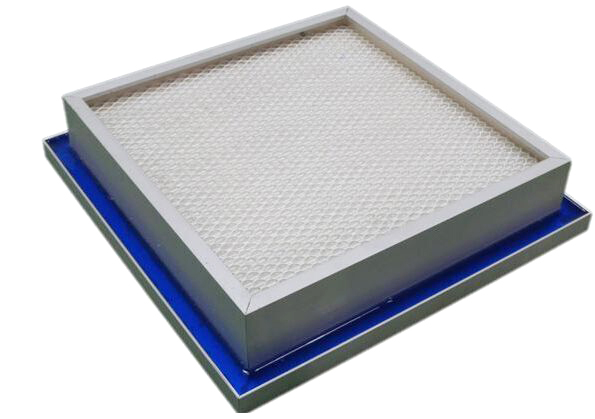
A Reinraumsystem is a controlled environment designed to maintain extremely low levels of airborne particles, microbial contamination, temperature fluctuations, and humidity variations.
According to the ISO 14644 standard for cleanrooms and associated controlled environments, as well as the guidelines of the Institute of Environmental Sciences and Technology (IEST), cleanroom systems are essential in industries such as pharmaceuticals, biotechnology, semiconductors, medical devices, aerospace, and precision manufacturing, as they ensure product quality, regulatory compliance, and contamination control.
Modern cleanroom systems integrate architectural structures, HVAC filtration technologies, pressure control, monitoring systems, and operational procedures to create a unified, contamination-controlled environment.
Introduction
In today’s advanced manufacturing landscape, product quality often hinges on environmental control. Even microscopic contamination can result in product failure, regulatory violations, financial losses, or safety risks when producing semiconductor chips measured in nanometers, sterile injectable pharmaceuticals, medical implants, or aerospace components. As manufacturing tolerances become more precise, the demand for controlled production environments is growing across nearly every high-tech industry.
This has led to the widespread adoption of cleanroom systems, which are among the most important infrastructures in modern manufacturing and scientific research. A cleanroom system is far more than just an enclosed room; it is a comprehensive engineering solution designed to regulate airborne particles, microbial contamination, airflow patterns, temperature, humidity, pressure differentials, and personnel behaviour. Every component works together to maintain a controlled environment that protects sensitive products and processes from contamination.
With industries moving towards greater automation, stricter regulatory requirements, and higher quality standards in 2026, it is becoming increasingly important for manufacturers, engineers, facility managers, procurement professionals, and investors to understand how cleanroom systems function. This guide provides a detailed exploration of the structure, operation, classifications, applications, and future development of modern cleanroom systems.
What Is a Cleanroom System?
A cleanroom system is an integrated environmental control solution designed to minimise contamination by regulating airborne particles, microorganisms, temperature, humidity, pressure, and airflow within a defined space.
Unlike ordinary indoor environments, cleanrooms continuously filter and circulate air through specialised filtration systems to remove contaminants before they can affect products, processes, or research activities.
A complete cleanroom system typically includes:
- Cleanroom architectural enclosure
- HVAC system
- HEPA or ULPA filtration
- Airflow management system
- Pressure control system
- Environmental monitoring system
- Personnel decontamination system
- Material transfer system
- Lighting and electrical systems
- Cleanroom furniture and equipment
The effectiveness of a cleanroom system does not depend on any single component, but rather on how all elements operate together as a coordinated contamination control ecosystem.
Why Are Cleanroom Systems Important?
The primary purpose of a cleanroom system is to control contamination. Contamination can originate from a variety of sources, such as personnel, equipment, materials, packaging, airflow, and the building itself.
A single person may release:
- Thousands of skin particles per minute
- Hair fibres
- Microorganisms
- Clothing fibres
- Respiratory droplets
Without proper environmental control, these contaminants can compromise manufacturing processes and product integrity.
The consequences vary by industry:
| Industry | Potential Contamination Impact |
| Pharmaceuticals | Product recalls, patient safety risks |
| Biotechnology | Experiment failure |
| Semiconductors | Circuit defects |
| Medical Devices | Sterility failure |
| Aerospace | Component malfunction |
| Optics | Surface imperfections |
For many manufacturers, contamination prevention is significantly less expensive than contamination remediation.
Key Components of a Cleanroom System
Modern cleanroom systems consist of multiple interconnected subsystems that work together to maintain environmental stability.
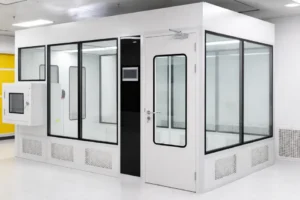
Cleanroom structure and enclosure
The physical enclosure forms the foundation of the cleanroom system.
Typical construction materials include:
- Sandwich panels
- Powder-coated steel panels
- Stainless steel panels
- Aluminium framing systems
- Tempered glass windows
These materials are selected for the following properties:
- Smooth surfaces
- Low particle generation
- Chemical resistance
- Easy cleaning
The enclosure creates a controlled barrier between the cleanroom environment and the surrounding areas.
HVAC System: The heart of the cleanroom
The HVAC (heating, ventilation, and air conditioning) system is arguably the most critical component of a cleanroom.
Its responsibilities include:
- Air filtration
- Temperature control
- Humidity control
- Air circulation
- Pressure regulation
Unlike conventional building HVAC systems, cleanroom HVAC systems are specifically designed to maintain contamination control and environmental stability.
In many facilities, the HVAC infrastructure accounts for 40–60% of the total cleanroom investment.
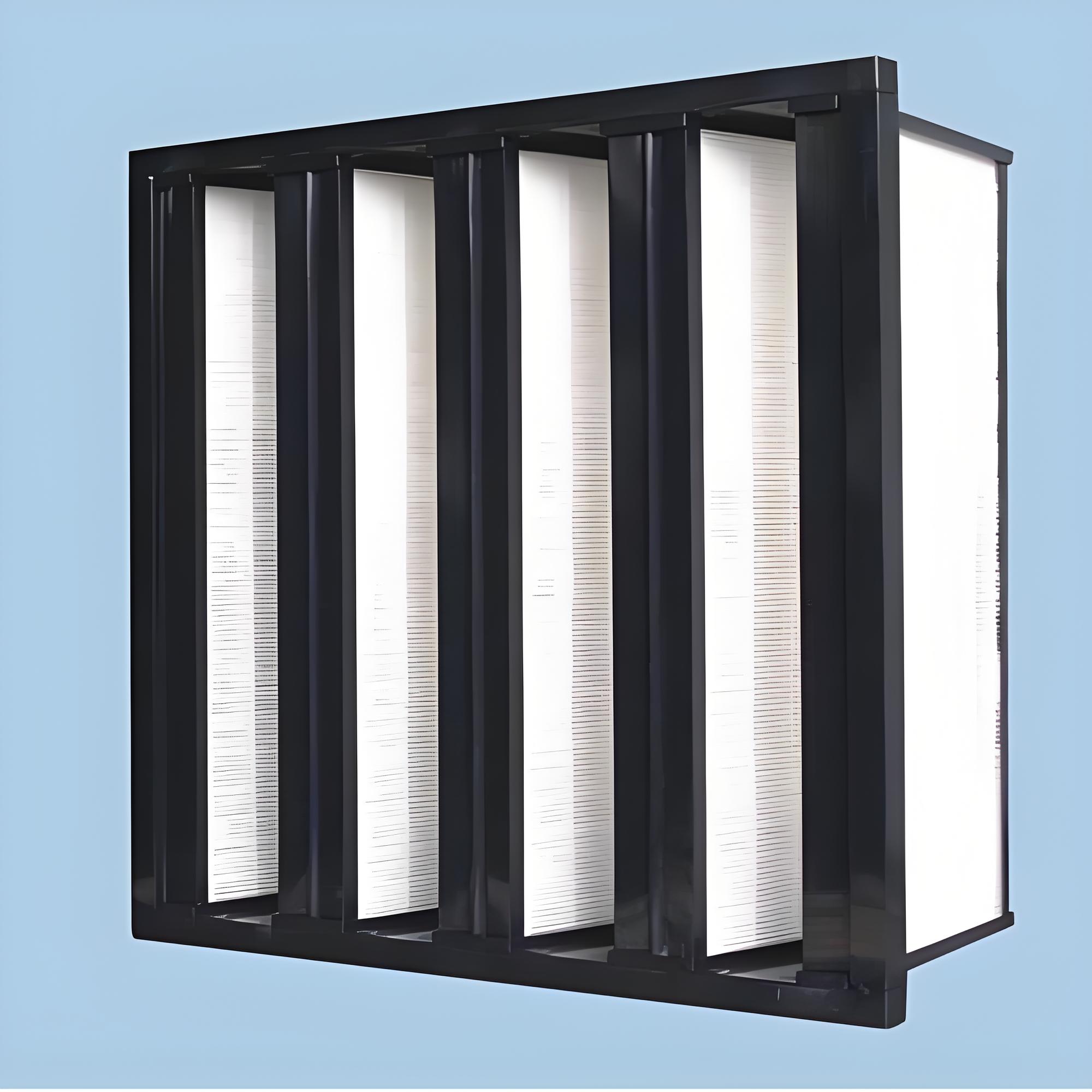
HEPA and ULPA filtration systems
Filtration technology is fundamental to cleanroom performance.
HEPA filters remove 99.97% of particles measuring 0.3 microns or more, while ULPA filters remove 99.9995% of particles measuring 0.12 microns or more. These filters continuously remove airborne contaminants before they enter critical process areas.
Airflow Management Systems
The design of airflow directly affects the effectiveness of contamination control.
The two primary airflow strategies commonly used are:
Turbulent airflow
Characteristics:
- Lower cost
- Suitable for less critical environments
- Mixed airflow patterns
Applications:
- ISO Class 8
- ISO Class 7
- Laminar airflow
Characteristics:
- Unidirectional airflow
- Higher contamination control
- Uniform air velocity
Applications:
- ISO Class 5
- Pharmaceutical filling areas
- Semiconductor production
Proper airflow management ensures that contaminants are rapidly removed from critical zones.
Cleanroom Classification Standards
Not all cleanrooms operate at the same cleanliness level.
The most widely recognized standard is ISO 146441, which classifies cleanrooms according to airborne particle concentration.
ISO Cleanroom Classification Table
| ISO Class | Maximum Particles ≥0.5 μm per m³ |
| ISO 1 | 10 |
| ISO 2 | 100 |
| ISO 3 | 1,000 |
| ISO 4 | 10,000 |
| ISO 5 | 100,000 |
| ISO 6 | 1,000,000 |
| ISO 7 | 352,000 |
| ISO 8 | 3,520,000 |
| ISO 9 | Comparable to room air |
Lower ISO numbers indicate cleaner environments.
For example:
- Semiconductor lithography may require ISO Class 3–5.
- Pharmaceutical sterile filling often requires ISO Class 5.
- Medical device assembly may use ISO Class 7 or ISO Class 8.
How Does a Cleanroom System Work?
A cleanroom system maintains a highly regulated environment through continuous contamination control, combining advanced air filtration, controlled airflow, environmental monitoring, and strict operational procedures. The aim is to minimise airborne particles, microorganisms, and other contaminants that could affect sensitive manufacturing, research, or healthcare processes.
Step 1: Air intake and HVAC processing
The process begins when outside or recirculated air enters the cleanroom’s HVAC (heating, ventilation, and air conditioning) system.
Functions include:
- Temperature control
- Humidity regulation
- Pressure management
- Initial air treatment
This creates a stable environmental foundation for contamination control.
Step 2: Prefiltration
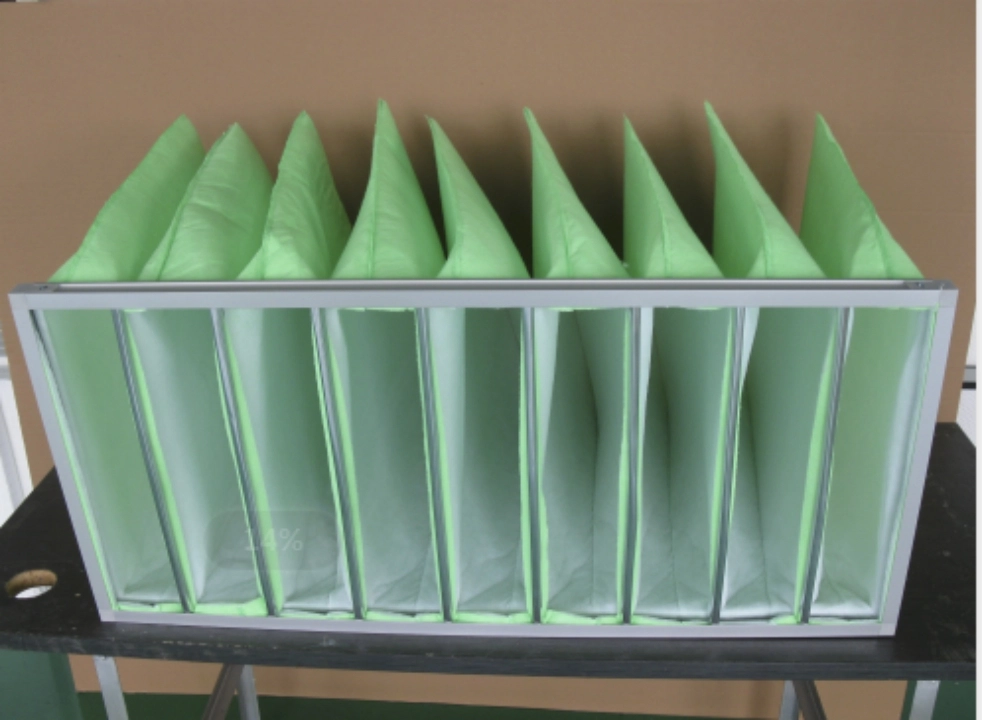
Before reaching the high-efficiency filters, the air passes through prefilters that capture larger contaminants, such as:
- Dust
- Fibres
- Pollen
- Large particulate matter
Prefiltration extends the service life of downstream HEPA and ULPA filters, improving overall system efficiency.
Step 3: HEPA or ULPA filtration
The filtered air then passes through highperformance filtration systems.
HEPA filters (high-efficiency particulate air) remove at least 99.97% of particles measuring 0.3 microns.
ULPA filters (ultralow penetration air) capture even smaller particles with efficiencies exceeding 99.999%.
These filters are the core components responsible for achieving cleanroom cleanliness classifications.
Step 4: Conditioned air delivery
After filtration, the conditioned air enters the cleanroom via ceiling diffusers, fan filter units (FFUs), or specialised air distribution systems.
The supplied air is:
- Clean;
- Temperaturecontrolled;
- Humiditycontrolled;
- Delivered at a carefully regulated flow rate.
Step 5: Controlled Airflow Management
Effective airflow design is essential for controlling contamination.
Common airflow patterns include:
Laminar (unidirectional) airflow: air moves in a single direction at a uniform velocity.
This is common in semiconductor, pharmaceutical, and biotechnology facilities.
Turbulent (nonunidirectional) airflow: clean air mixes throughout the room to dilute contaminants.
This is frequently used in less critical cleanroom environments.
The airflow continuously pushes particles away from critical production or research zones.
Step 6: Air return and recirculation
Once the air has circulated through the cleanroom, it is either:
Returned to the HVAC system for refiltration and recirculation; or
Exhausted from the facility when complete removal of contaminants is required.
Many modern cleanroom systems utilise recirculation to improve energy efficiency while maintaining strict cleanliness standards.
Step 7: Environmental Monitoring
Continuous monitoring ensures compliance with the required cleanliness standards.
Typical monitoring parameters include:
- Particle concentration
- Temperatur
- Relative humidity
- Differential pressure
- Airflow velocity
- Air change rates
Real-time monitoring systems provide alerts when conditions move outside acceptable limits.
Personnel and material control
Air filtration alone cannot maintain cleanroom integrity.
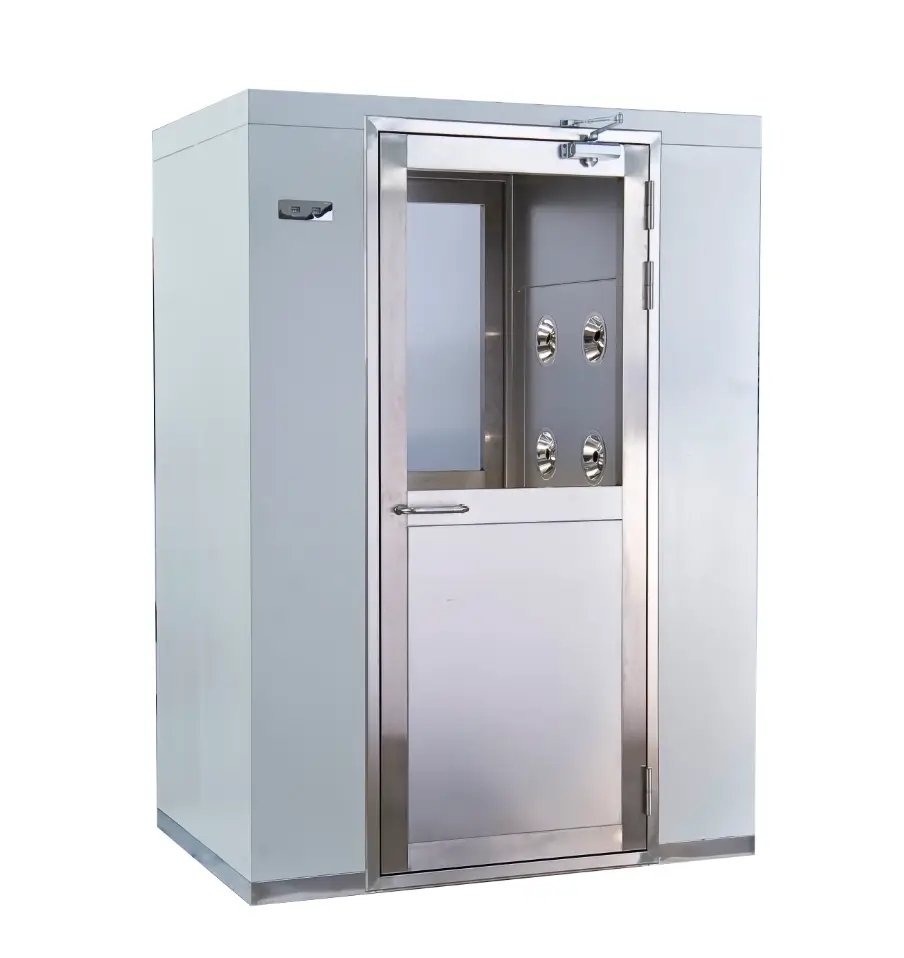
Personnel and materials must pass through controlled entry systems, such as:
- Airlocks
- Gowning rooms
- Passthrough chambers
- Material transfer systems
These procedures minimise the introduction of contaminants from external environments.
Common requirements include:
- Cleanroom garments
- Gloves
- Face masks
- Shoe covers
- Sanitisation procedures
Continuous 24/7 contamination control
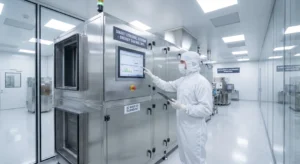
A cleanroom system operates continuously to maintain environmental stability and compliance. Every component — filtration, airflow, pressure control, monitoring, and personnel management — works together as an integrated contamination control strategy.
Types of Cleanroom Systems
Modern facilities utilise a variety of cleanroom designs, depending on their operational requirements.
Hardwall Cleanroom Systems
Hardwall cleanroom systems use rigid panel construction.
Advantages:
- Excellent durability
- Superior environmental control
- Long service life
- Regulatory compliance
Common industries:
- Pharmaceuticals
- Semiconductors
- Biotechnology
Softwall cleanroom systems
Softwall cleanrooms utilise flexible curtain materials.
Advantages:
- Lower cost
- Rapid installation
- Easy expansion
Common applications:
- Laboratories
- Electronics assembly
- Pilot production
Modular cleanroom systems
Modular cleanrooms are becoming increasingly popular.
Benefits include:
- Fast deployment
- Scalability
- Lower construction disruption
- Flexible future expansion
Many manufacturers prefer modular solutions because they reduce project timelines while maintaining high performance standards.
Cleanroom System Applications Across Industries
Cleanroom systems have become much more versatile over the past decade.
Pharmazeutische Herstellung
Cleanrooms ensure:
- Sterility assurance
- GMP compliance
- Product quality consistency
Applications include:
- Injectable drugs
- Vaccines
- Biologics
- Cell therapy production
Semiconductor manufacturing
Microelectronic components are extremely sensitive to contamination.
Even particles invisible to the human eye can damage circuits.
Therefore, semiconductor facilities often require the highest cleanliness classifications.
Medizinprodukteherstellung
Applications include:
- Surgical instruments
- Implants
- Catheters
- Diagnostic equipment
Contamination control directly affects patient safety.
Biotechnologie und Lebenswissenschaften
Research facilities require controlled environments to maintain experimental integrity and biological safety.
Emerging Cleanroom Trends in 2026
Several trends are reshaping the cleanroom industry:
- Modular cleanroom expansion
- AI-based environmental monitoring
- Energy-efficient HVAC systems
- Smart cleanroom automation
- Sustainable construction materials
- Digital twin technology
- Realtime contamination analytics
These innovations improve both operational efficiency and contamination control performance.
Supplier Selection Considerations
When investing in a cleanroom project, selecting an experienced solution provider is critical.
Key evaluation factors include:
| Evaluation Criteria | Importance |
| Engineering Expertise | Very High |
| GMP/ISO Knowledge | Very High |
| HVAC Design Capability | Very High |
| Turnkey Project Experience | High |
| Validation Support | High |
| Global Project References | High |
| AfterSales Service | High |
Professional cleanroom solution providers such as UPTING offer integrated EPC and modular cleanroom solutions covering design, manufacturing, installation, commissioning, and validation support for pharmaceutical, electronics, and advanced manufacturing facilities.
Frequently Asked Questions (FAQ)
- What is a cleanroom system used for?
A cleanroom system is used to control airborne particles, microorganisms, temperature, humidity, and other environmental conditions to protect sensitive manufacturing processes and products.
- What industries require cleanroom systems?
Common industries include pharmaceuticals, biotechnology, semiconductors, medical devices, aerospace, optics, and advanced electronics manufacturing.
- What is the difference between a cleanroom and a cleanroom system?
A cleanroom refers to the controlled space itself, while a cleanroom system encompasses all integrated components, including HVAC, filtration, monitoring, architecture, and contamination control processes.
- What is ISO 14644?
ISO 14644 is the international standard that defines cleanroom classifications and contamination control requirements based on airborne particle concentrations.
- What is the purpose of HEPA filters in a cleanroom?
HEPA filters remove at least 99.97% of airborne particles measuring 0.3 microns, helping maintain required cleanliness levels.
- How much does a cleanroom system cost?
Costs vary depending on cleanroom size, ISO classification, HVAC complexity, industry requirements, and validation needs. Projects may range from tens of thousands to several million dollars.
Conclusion
A cleanroom system is much more than just a controlled environment; it is a sophisticated ecosystem for controlling contamination that integrates architecture, HVAC engineering, filtration technology, airflow management, environmental monitoring, and operational procedures into a unified solution. As industries increasingly rely on precision manufacturing, sterility assurance, and regulatory compliance, cleanroom systems have become essential infrastructure in the pharmaceutical, semiconductor, biotechnology, medical device, and advanced manufacturing sectors.
The future of cleanroom technology in 2026 is being shaped by modular construction, intelligent monitoring systems, sustainable engineering practices, and digital automation. Organisations that invest in properly designed and validated cleanroom systems can significantly improve product quality, operational efficiency, regulatory compliance, and longterm competitiveness. Understanding how cleanroom systems work — and how to select the right solution — remains a critical step for any company operating in contamination-sensitive environments.