
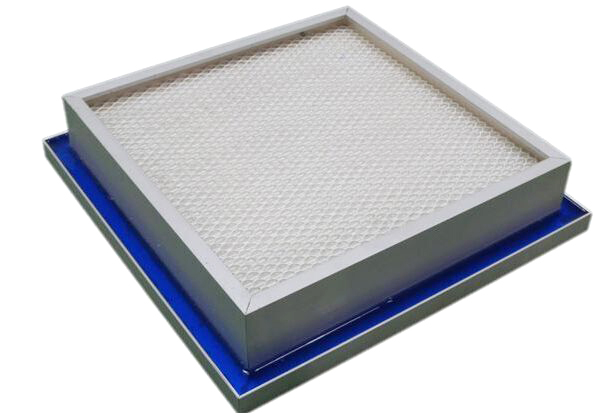
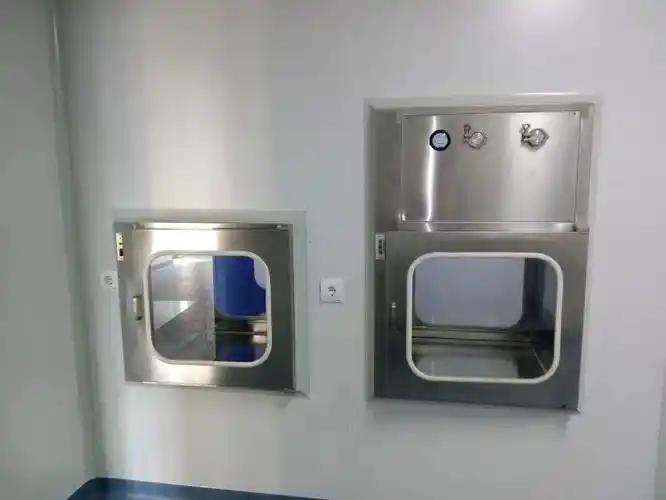
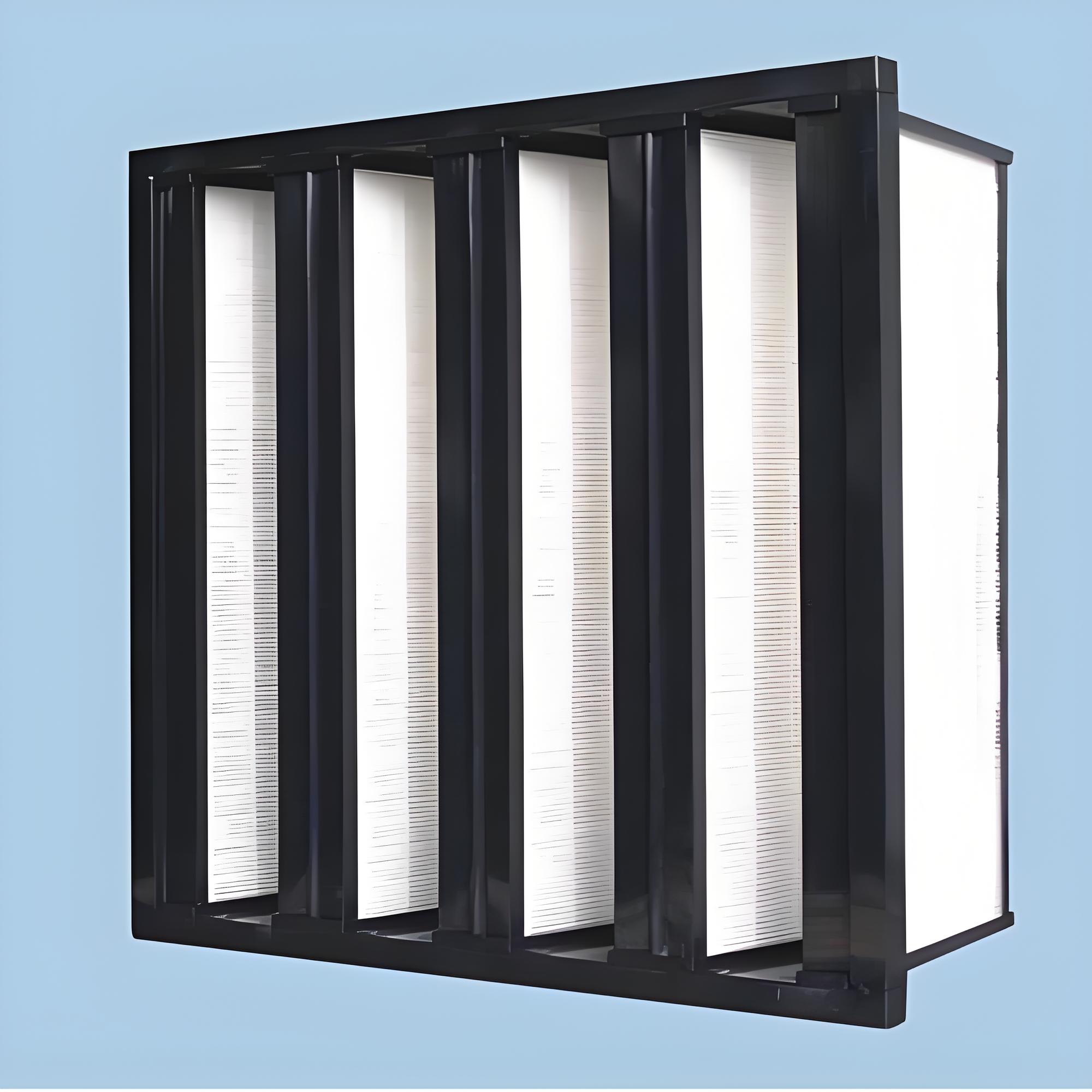
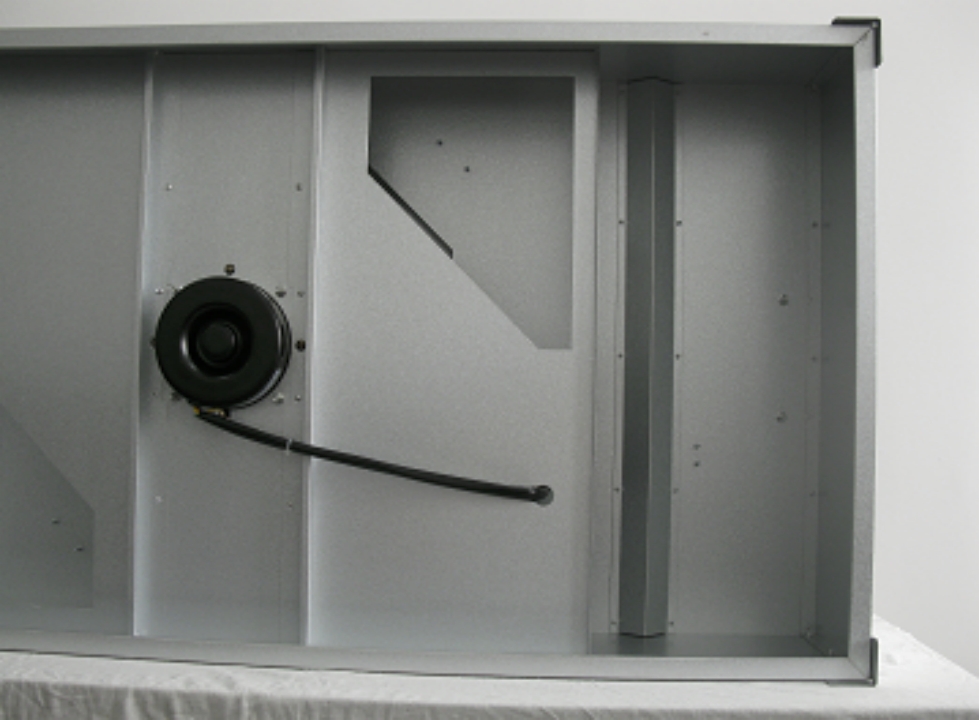
There is no universally better option between a HEPA filter and a ULPA filter; the right choice depends on the required particle-removal efficiency, airflow, cleanliness level, and operating cost. HEPA filters are generally suitable for HVAC systems, hospitals, pharmaceutical facilities, and many cleanrooms, whereas ULPA filters provide a higher level of particle retention for applications with exceptionally strict contamination control requirements, such as certain semiconductor and precision manufacturing environments. According to the U.S. Environmental Protection Agency (EPA) and ISO 29463:2024, filter performance should be assessed using defined particle-efficiency classifications and standardised testing, rather than relying solely on the HEPA or ULPA label.
What Are HEPA and ULPA Filters?
Both HEPA and ULPA filters are high-efficiency mechanical air filters designed to remove airborne particles from a moving air stream. They both commonly use densely arranged fibrous filter media that is often folded into pleats to maximise the filtration area within a compact housing. As contaminated air passes through the filter media, particles are captured by mechanisms including interception, inertial impaction and diffusion. These mechanisms work together to remove particles across a broad size range, including those smaller than the gaps between the fibres.
HEPA filters, short for High-Efficiency Particulate Air filters, are widely used wherever high particle-removal performance is required without imposing unnecessary restrictions on system airflow. In the United States, the EPA describes HEPA filtration as capable of removing at least 99.97% of particles measuring 0.3 micrometres (µm). This particle size is commonly used as a reference point as it is close to the most penetrating particle size (MPPS) for many conventional filter media. However, the actual MPPS depends on the filter design and test conditions.
A ULPA filter (Ultra-Low Penetration Air) is designed for even higher particle removal efficiency and correspondingly lower particle penetration. They are commonly used in environments where extremely low airborne particle concentrations are necessary, including in selected semiconductor manufacturing processes, advanced cleanrooms, and specialised contamination-control systems. Under the EN 1822 classification system, ULPA filters include classes U15, U16 and U17, which have progressively higher efficiency requirements. While the higher performance can be valuable, it must be considered alongside pressure drop, fan capacity, energy consumption, and the requirements of the process being protected.
It is important not to treat HEPA and ULPA as two interchangeable product labels with a single universal efficiency value. Different standards use different classifications and test procedures. A purchasing specification should identify the applicable standard, filter class, rated airflow, pressure drop, and integrity-testing requirements.

HEPA vs. ULPA Filter: What Are the Main Differences?
The fundamental difference lies in filtration performance. ULPA filters are designed to allow less particle penetration than HEPA filters under their respective classification and test conditions. However, a higher efficiency rating does not necessarily equate to a better filtration solution for every facility. The filter must be used in an air-handling system that can maintain the required airflow, pressure balance, and operating stability.
The following table summarises the main differences. The efficiency values shown for EN 1822 classes are based on their classification at the most penetrating particle size (MPPS). The U.S. EPA’s commonly quoted HEPA benchmark is presented separately because it uses a different reference convention.
| Comparison factor | HEPA Filter | ULPA Filter |
| Full name | High-Efficiency Particulate Air | Ultra-Low Penetration Air |
| Common EN 1822 classes | H13, H14 | U15, U16, U17 |
| Example minimum efficiency at MPPS | H13: 99.95%; H14: 99.995% | U15: 99.9995%; U16: 99.99995%; U17: 99.999995% |
| Common U.S. reference | 99.97% at 0.3 µm | Historical references commonly cite 99.999% or higher at a specified particle size. |
| Particle penetration | Higher than ULPA at comparable classification conditions | Lower than HEPA at comparable classification conditions |
| Airflow resistance | Generally lower for comparable designs, but product-dependent | Often higher for comparable designs, depending on media and construction |
| Typische Anwendungen | Hospitals, pharmaceutical facilities, laboratories, HVAC and cleanrooms | Semiconductor manufacturing, selected precision processes and ultra-clean environments |
| System requirements | Requires suitable fan capacity, sealing and filter integrity testing | May require greater attention to fan capacity, pressure drop and system design |
| Relative cost | Generally lower | Generally higher, depending on class, size and construction |
The EN 1822 figures above represent the minimum integral efficiency values at MPPS. H13 and H14 filters have separate local efficiency requirements, and U-class filters have their own integral and local limits. These details are important because a filter should not be classified merely because it achieves a high average efficiency if it has a localised leak or weak area that compromises its performance. ISO 29463-1:2024 provides an international framework for classifying, testing and marking high-efficiency filters.
Another important difference concerns the effect on the air-handling system. ULPA filter construction and media may produce greater resistance to airflow than a comparable HEPA design. However, this is not an absolute rule, as pressure drop varies according to filter area, media structure, pleat geometry, face velocity, and rated airflow. A facility that upgrades from HEPA to ULPA without reviewing its fan and ventilation design may experience reduced airflow, increased energy usage, or difficulty in maintaining room pressure.
How Do HEPA and ULPA Filters Work?
Both filter types rely on mechanical particle-capture mechanisms rather than simply acting as sieves with openings smaller than every particle they capture. The fibers inside the filter media create a complex path for air to travel through. As particles move along this path, they interact with fibers and become trapped through several physical processes.
- Interception: A particle follows the airflow around a filter fiber but passes close enough to touch its surface, where it is retained.
- Inertial impaction: Larger or heavier particles cannot follow changes in airflow direction as easily, causing them to collide with fibers.
- Diffusion: Very small particles undergo Brownian motion, which increases the likelihood that they will contact and adhere to fibers.
- Electrostatic effects: Depending on the filter media, electrostatic forces may contribute to particle capture, although classification and performance requirements must account for the applicable test method and media condition.
The combined effect of these mechanisms is what enables high-efficiency filters to capture particles that are both larger and smaller than the nominal fibre spacing. It also explains why filtration performance is not determined by one particle diameter alone. The MPPS is the particle size that most readily penetrates a particular filter under specified test conditions; particles above and below this size may be captured more efficiently. The MPPS varies for different filters and can depend on the composition of the medium, the diameter of the fibres, the air velocity and the electrostatic characteristics.
For procurement and engineering purposes, therefore, a statement such as ‘captures particles down to 0.1 µm’ is insufficient to determine whether a filter meets the required classification. Rather than relying on simplified particle-size claims, buyers should request certified performance data based on the relevant standard and test conditions.
When Should You Choose a HEPA Filter?
A HEPA filter is often the more practical choice when a facility needs highly effective particle removal but does not require the extremely low penetration associated with ULPA filtration. It provides a strong balance between filtration efficiency, airflow performance, availability, and operating cost. For many applications, choosing ULPA instead would add system resistance and procurement expense without producing a meaningful improvement in the cleanliness outcome required by the process.
Common HEPA applications include:
- Hospitals and healthcare facilities
HEPA filtration is used in selected healthcare ventilation systems, isolation rooms, operating theatres and portable air-cleaning equipment, as controlling airborne particles is important in these environments. The appropriate filter class and installation arrangement depend on the room’s intended use, the ventilation design, and the applicable healthcare standards. For example, NHS England recommends HEPA filters classified under BS EN 1822-1 or ISO 29463-1 for relevant healthcare air-cleaning applications, while emphasising the importance of validating the entire device rather than relying solely on the filter rating.
- Pharmazeutische Herstellung
Pharmaceutical production areas may use HEPA filters in air-handling units, terminal supply systems and cleanroom installations to help control airborne particulate contamination. The required class depends on the cleanliness classification, process risk, airflow pattern and facility design. Filter integrity, housing leakage and installation quality are just as important as the nominal filter efficiency.
- Laboratories and research facilities
Laboratories use HEPA filtration in selected ventilation systems, clean benches and equipment enclosures. The specific design depends on whether the objective is to protect the product, the operator, the environment, or a combination of these. Contaminated exhaust applications may require additional containment and treatment measures beyond a high-efficiency filter.
- Commercial and industrial HVAC systems
HEPA filters are used in specialized HVAC systems where ordinary particulate filtration is insufficient. They may support cleaner production environments, sensitive equipment areas, and facilities with strict indoor-air requirements. However, the air-handling unit must be designed to accommodate the filter’s resistance without compromising the required air volume.

When Is a ULPA Filter the Better Choice?
ULPA filtration is necessary when the acceptable level of airborne particle penetration is extremely low, and a HEPA filter cannot meet the required specifications for the process. This is particularly important in manufacturing environments, where even a small amount of airborne contamination can affect product yield, surface quality, or the reliability of precision equipment. In such settings, the decision to use ULPA filtration should be based on documented contamination control requirements rather than simply a preference for the highest available efficiency rating.
Typical applications include:
- Semiconductor and microelectronics manufacturing
Certain areas of semiconductor production require exceptionally strict control of airborne particles because even the smallest amount of contamination can affect the surfaces of wafers, circuit patterns, and manufacturing yield. ULPA filters may be used in selected cleanroom supply systems and localised filtration equipment depending on the process and the required cleanliness level. Not all cleanrooms used for semiconductor production use ULPA filters throughout the facility; the contamination-control design determines the filter class and placement.
- Advanced precision manufacturing
Some optical, precision instrument, and specialized electronics manufacturing processes have stringent requirements for airborne particle concentrations. ULPA filtration may be appropriate where the process specification calls for lower particle penetration than a HEPA system can provide. The actual requirement should be established through contamination-risk assessment and cleanroom classification.
- Specialized clean-air equipment
ULPA filters can be installed in selected clean-air workstations, mini-environments, and equipment enclosures where a highly controlled local air supply is necessary. Such applications often necessitate close coordination between filter performance, airflow velocity, enclosure design, and particle monitoring.
It is important to note that ULPA is not necessarily required in every cleanroom or high-technology facility. A well-designed HEPA system can meet many demanding cleanliness requirements. ULPA should only be specified when process validation data or an applicable engineering standard demonstrates a genuine need for its lower penetration performance.
What Factors Should You Consider When Selecting a HEPA or ULPA Filter?
Choosing between HEPA and ULPA requires more than comparing efficiency percentages. A suitable filter must meet the required cleanliness target while maintaining the airflow, pressure conditions, and reliability of the complete filtration system.
The following factors should be evaluated before procurement:
- Required cleanliness level: Identify the applicable cleanroom classification, process contamination limit, or indoor-air requirement. Determine whether HEPA filtration already provides sufficient particle control or whether ULPA performance is necessary.
- Applicable filtration standard: Specify EN 1822, ISO 29463, or another recognized test framework, including the exact filter class. Avoid purchasing based only on broad descriptions such as “99.99% efficient.”
- Rated airflow and face velocity: Confirm that the filter can deliver the required air volume at the intended operating conditions. The performance stated on a product datasheet should correspond to the specified airflow.
- Initial and final pressure drop: Review the initial resistance and the permitted final pressure drop. A filter with excessive resistance may increase fan energy consumption or prevent the system from maintaining its design airflow.
- Filter dimensions and construction: Check the frame material, gasket design, separators or separatorless construction, pleat configuration, and installation dimensions. These details influence sealing, durability, and compatibility with the housing.
- Leakage and integrity testing: Confirm whether individual filters require factory scan testing, aerosol challenge testing, or on-site installed-system testing. A high-efficiency filter cannot deliver its rated performance if air bypasses the media through damaged seals or poorly fitted frames.
- Maintenance and replacement costs: Consider filter life, replacement accessibility, disposal requirements, spare-part availability, and the cost of maintaining the ventilation system over its operating life.
| Selection factor | Questions to ask | Why it matters |
| Cleanliness requirement | What particle concentration or cleanroom class must be achieved? | Determines whether HEPA or ULPA is justified |
| Filter classification | Is the filter H13, H14, U15, U16, or U17 under the specified standard? | Prevents confusion between different rating systems |
| Luftstrom | What is the required airflow at the design operating point? | Ensures sufficient ventilation and process air supply |
| Pressure drop | What are the initial and final pressure-drop limits? | Affects fan selection and energy consumption |
| Housing and sealing | Is the filter compatible with the frame, gasket, and terminal housing? | Reduces bypass leakage |
| Testing documentation | Is an individual test report or on-site integrity test required? | Verifies filter performance and installation quality |
| Lifecycle cost | What are the replacement interval, energy use, and maintenance requirements? | Supports long-term operating cost decisions |
For cleanroom and critical ventilation projects, the filter should be treated as one part of an integrated air-handling system. The fan, ductwork, terminal housing, room pressure controls, airflow pattern, and monitoring equipment all influence the cleanliness achieved in practice. The National Institutes of Health’s technical guidance on cleanroom HEPA filtration similarly emphasizes filter and housing design, installation and integrity testing throughout the facility lifecycle.
Are ULPA Filters Always More Expensive and Harder to Maintain?
ULPA filters tend to be more expensive than comparable HEPA filters due to their higher performance requirements, which can necessitate specialised materials, construction methods and testing procedures. However, the price difference can vary depending on the dimensions of the filter, the rated airflow, the frame material, the production volume, the certification requirements and the capabilities of the supplier. For example, a small ULPA filter for a localised workstation may have a very different cost structure from that of a large terminal filter bank in an industrial cleanroom.
Maintenance costs also depend on the entire system. Higher pressure drop can require additional fan energy, and a system operating close to its fan capacity limit may require engineering adjustments when ULPA filters are installed. The frequency with which filters need to be replaced is not determined by the HEPA or ULPA label alone; it is influenced by upstream particle loading, operating hours, humidity, airflow, and the facility’s permitted final pressure drop. While a properly monitored ULPA system can operate reliably, its lifecycle economics should be assessed before the initial specification is finalised.
Why Filter Installation and Integrity Testing Matter?
Even an excellent laboratory-performing filter can fail to protect a room if it is installed incorrectly or if air leaks around the filter media. Common issues include damaged gaskets, filter frames that are not properly seated, cracks in the housing, damaged filter media, and leakage at connection points. These issues are particularly serious in cleanrooms and critical environments, as contaminated air can bypass the filter entirely.
For this reason, the selection of filters should include an installation and verification plan. Depending on the application and standard, this may involve factory efficiency testing, testing individual filters, testing the installed system for leaks, and periodic requalification. IEST recommended practices guide the construction and testing of HEPA and ULPA filters, while ISO 29463 establishes classification and performance testing requirements.
A sound maintenance programme should also monitor differential pressure, airflow, and room particle levels. Filters should be replaced according to the manufacturer’s recommendations and the facility’s validated procedures rather than an arbitrary schedule. After replacement, the installation should be checked to confirm that the new filter is correctly seated and that the system continues to meet its specified performance requirements.
Frequently Asked Questions About HEPA and ULPA Filters
- Is a ULPA filter better than a HEPA filter?
ULPA filters provide higher particle-removal efficiency and lower penetration under their respective classification conditions. However, HEPA is often the better overall choice when it already meets the required cleanliness level, with lower system resistance and operating cost.
- What is the difference between HEPA H13 and H14 filters?
Under EN 1822, H13 filters have a minimum integral efficiency of 99.95% at MPPS, while H14 filters have a minimum integral efficiency of 99.995%. H14 provides lower particle penetration, but the appropriate choice depends on the facility’s cleanliness and system requirements.
- What is the efficiency of a ULPA filter?
Under EN 1822, U15, U16, and U17 filters have minimum integral efficiencies of 99.9995%, 99.99995%, and 99.999995%, respectively, at MPPS. Always confirm the applicable classification standard and filter test report before comparing products.
- Can a HEPA filter capture viruses and bacteria?
A properly rated HEPA filter can capture airborne particles that carry viruses and bacteria through mechanical filtration. Its effectiveness in a real room also depends on airflow, air circulation, filter installation, and the performance of the complete air-cleaning system.
- Do ULPA filters have a higher pressure drop than HEPA filters?
ULPA filters often have higher airflow resistance than comparable HEPA filters, but the actual pressure drop depends on media design, filter area, pleat configuration, and operating airflow. Buyers should compare pressure-drop data at the same rated airflow rather than assume that all ULPA filters have identical resistance.
- How often should HEPA and ULPA filters be replaced?
There is no universal replacement interval because filter life depends on particle loading, operating conditions, pressure drop, and facility requirements. Differential-pressure monitoring, airflow checks, and scheduled integrity testing provide a more reliable basis for replacement decisions.
Schlussfolgerung
When comparing HEPA and ULPA filters, the better option is the one that meets the required air cleanliness standard without causing an unnecessary pressure drop or increasing energy consumption or maintenance costs. HEPA filters are suitable for a wide range of HVAC applications in healthcare, pharmaceuticals, laboratories, and industry, while ULPA filters are more appropriate for processes that demand exceptionally low particle penetration, such as in selected semiconductor and precision manufacturing environments.
Before making a purchase, evaluate the filter classification, MPPS efficiency, rated airflow, pressure drop, construction quality, sealing performance, and testing documentation. It is equally important to verify the installed filtration system rather than relying solely on the filter’s factory rating. A HEPA or ULPA filter that is properly selected, installed, and maintained will provide more reliable contamination control than simply choosing the filter with the highest efficiency percentage.


