
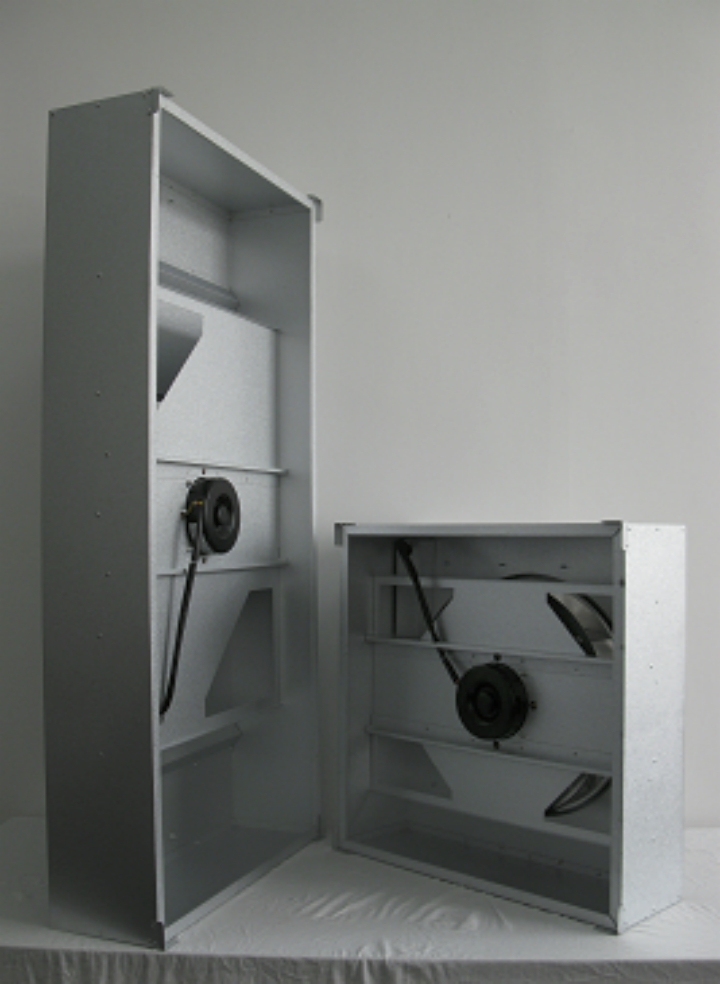
A cleanroom air filtration system is an integrated environmental control system designed to limit airborne particles, microorganisms, and other contaminants within a controlled space. It incorporates HEPA or ULPA filtration, HVAC equipment, controlled airflow, pressure differentials, temperature and humidity regulation, and performance monitoring. ISO 14644-1 establishes a classification system for cleanrooms based on airborne particle concentration, and ISO 14644-3 outlines cleanroom performance testing methods.
However, effective cleanroom air filtration requires more than just installing a high-efficiency filter; the entire system must also control how clean air enters, moves through, and leaves the space, while limiting contamination from people, equipment, materials, and adjacent areas. This guide explains the main components, filtration technologies, design considerations, qualification procedures, and maintenance practices used to build a reliable cleanroom system.
What Is a Cleanroom System for Air Filtration?
A [Sistema de sala limpia] is an engineered environment in which airborne contamination is controlled to meet the requirements of a specific manufacturing process, laboratory procedure, or product. Unlike ordinary ventilation systems, which primarily supply fresh air and remove heat, odours, and pollutants, cleanroom systems must maintain defined environmental conditions and prevent contamination from compromising sensitive operations. Depending on the application, these conditions may include particle concentration, microbial contamination, air pressure, airflow direction, temperature, relative humidity, and chemical contaminants.
Cleanroom systems are used in the manufacture of semiconductors, pharmaceuticals, and medical devices, and in biotechnology laboratories, the aerospace industry, and precision optical production. Acceptable contamination levels vary significantly between these industries. For example, a semiconductor facility may focus heavily on microscopic particles that can damage wafers, whereas a pharmaceutical cleanroom may also require controls for viable microorganisms, product exposure, and cross-contamination. Designing a cleanroom should therefore begin with a documented contamination control objective rather than a predetermined filter model or generic cleanroom classification.
ISO 14644-1 provides the international framework for classifying air cleanliness by particle concentration. However, particle classification alone does not guarantee that every aspect of a cleanroom is fit for purpose. For example, the U.S. Food and Drug Administration (FDA) explains that, while ISO particle classifications can be useful for sterile pharmaceutical facilities, they should not be the only basis for qualification, as microbiological risks and aseptic processing requirements also matter.
How Does a Cleanroom Air Filtration System Work?
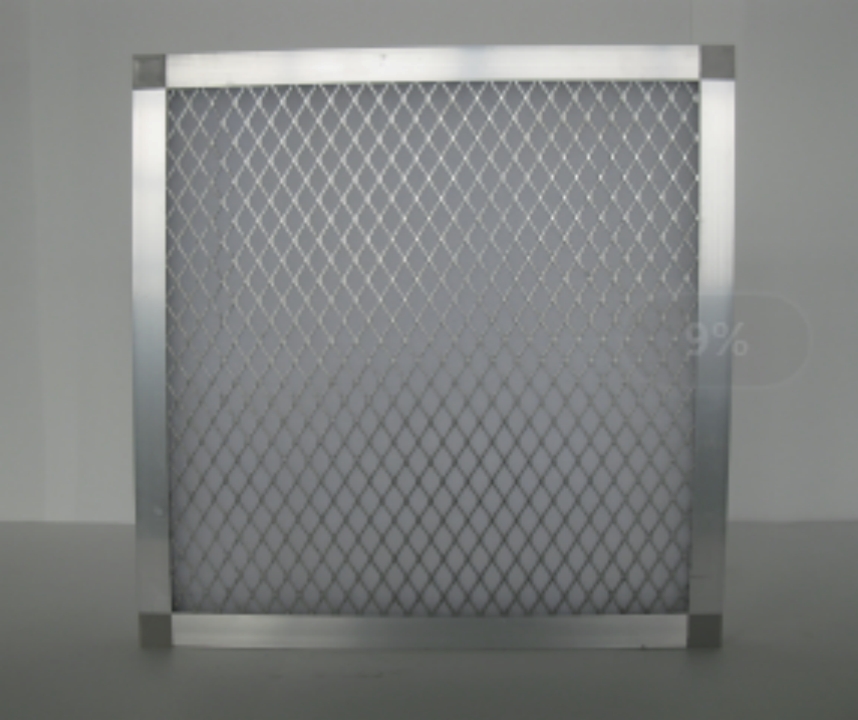
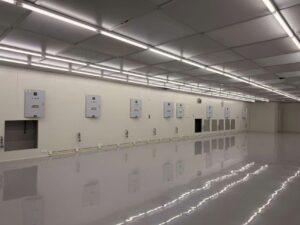
A typical cleanroom air filtration system draws air through a controlled air-handling unit, conditions it as necessary, and delivers it through high-efficiency terminal filters into the cleanroom. Depending on the design, the incoming air may first pass through prefilters and intermediate filters to remove larger particles and protect the final filtration stage. The air-handling equipment then regulates supply volume, temperature, and humidity, while the terminal HEPA or ULPA filters remove fine airborne particles before the air enters the controlled space.
Once clean air reaches the room, airflow distribution becomes just as important as filter efficiency. Supply air must reach critical work areas, dilute or displace contaminants, and return or exhaust air through appropriately positioned grilles. A well-designed layout avoids stagnant zones and limits the movement of contaminants from less-clean areas toward critical processes. In pharmaceutical applications, the FDA’s aseptic-processing guidance emphasizes the importance of HEPA-filtered air and appropriate airflow patterns in critical areas where sterile products or product-contact surfaces are exposed.
A complete system normally operates as a coordinated cycle: air is filtered, conditioned, supplied, circulated or exhausted, and monitored. Recirculation can reduce the energy needed to condition large volumes of air, but the appropriate balance between recirculated and outdoor air depends on occupancy, process emissions, ventilation requirements, and the contamination-control strategy. Processes that generate hazardous vapors, solvents, or other contaminants may require dedicated exhaust and carefully designed make-up air rather than unrestricted recirculation.
What Are the Main Components of a Cleanroom System?
A reliable cleanroom system integrates filtration, air movement, environmental conditioning, and monitoring. Each component performs a distinct function, but its performance depends on the other components being correctly selected and commissioned. For example, a high-efficiency filter cannot compensate for leakage around its frame, and a correctly sized air-handling unit cannot guarantee cleanliness if supply outlets create poor airflow patterns or doors allow uncontrolled air exchange.
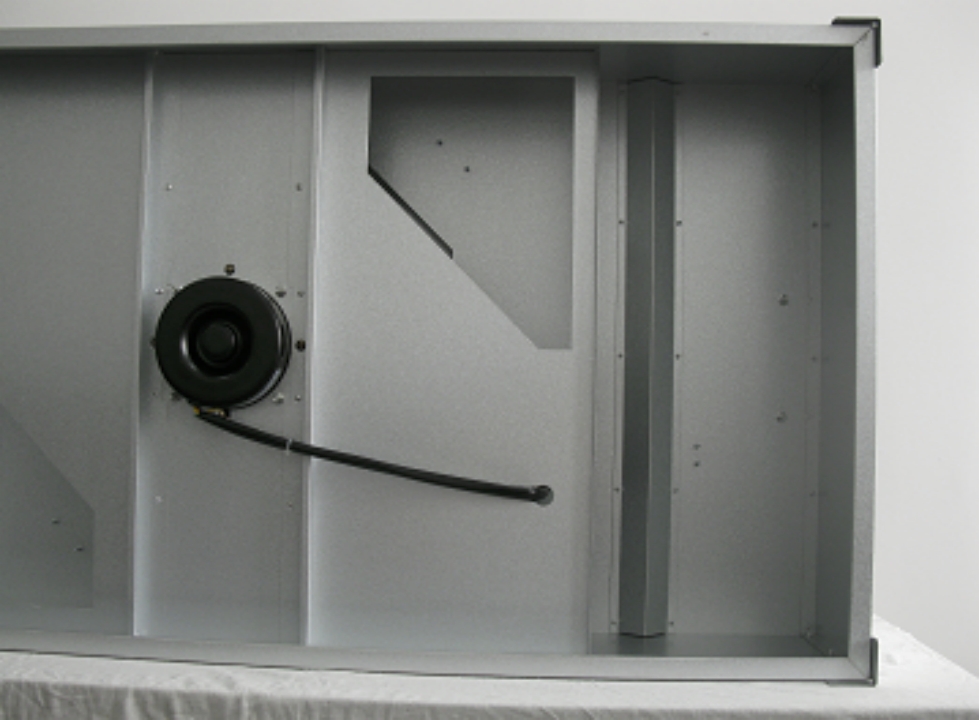
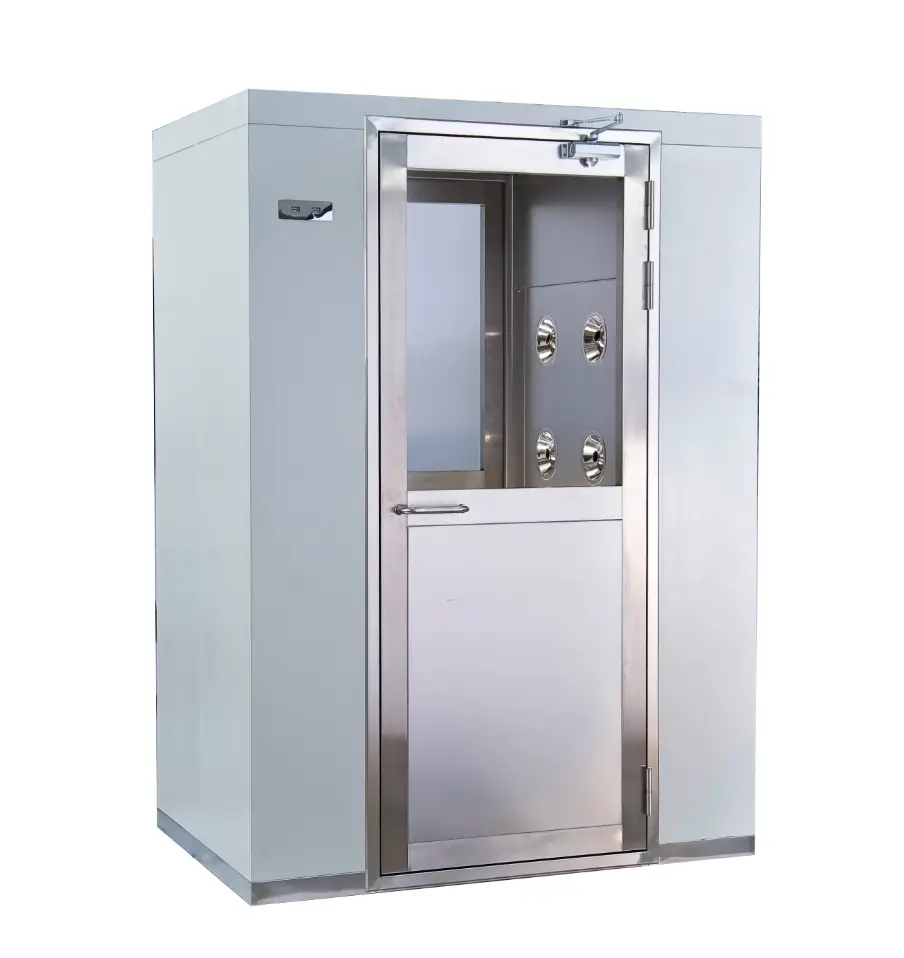
The principal components include prefilters, final HEPA or ULPA filters, air-handling units, supply and return ducts, terminal filter housings, fans, dampers, pressure-control devices, environmental sensors and a building management or monitoring system. Depending on the project, the installation may also incorporate fan filter units (FFUs), laminar-flow workstations, air showers, pass-through chambers and local extraction equipment. These additions should be selected according to the actual process risk rather than added simply because they are common in other cleanroom installations.
| Component | Primary function | Key design or maintenance consideration |
| Prefilter | Captures larger airborne particles before final filtration | Replacement interval and pressure drop |
| Intermediate filter | Reduces the particle load reaching terminal filters | Compatibility with the required airflow and filter stages |
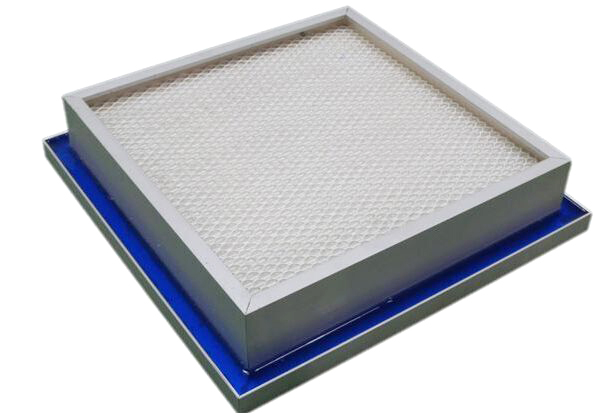
| Filtro HEPA | Removes high proportions of fine airborne particles | Efficiency rating, seal integrity and installed leak testing |
| ULPA filter | Provides higher particle-removal performance for demanding applications | Required cleanliness level, airflow resistance and cost |
| Air-handling unit | Supplies and conditions air | Fan capacity, cooling, heating, humidity control and energy use |
| Fan filter unit (FFU) | Combines a fan and high-efficiency filter, often at or near the ceiling | Airflow uniformity, access for maintenance and noise |
| Ducts and terminal housings | Distribute filtered air to the room | Leakage, cleanliness, pressure loss and filter sealing |
| Pressure monitoring | Measures pressure differences between spaces | Alarm limits, sensor location and calibration |
| Environmental monitoring | Tracks relevant particle and environmental parameters | Sampling locations, trends and documented responses |
HEPA vs. ULPA Filters: Which Is Better?
HEPA and ULPA filters are both designed to capture very small airborne particles, but they are not interchangeable in every cleanroom application. HEPA filters are widely used in pharmaceutical facilities, hospitals, laboratories, electronics manufacturing, and general controlled environments. ULPA filters can provide higher particle-removal performance for particularly demanding applications, including some semiconductor and precision-manufacturing processes, where the allowable particle concentration is extremely low.
Filter selection must account for more than the nominal efficiency percentage. Pressure drop, airflow capacity, installation dimensions, seal design, operating conditions, service life, and replacement costs all affect the final system. A filter with greater resistance can increase fan energy consumption or reduce airflow if the system is not designed for it. Likewise, a high-rated filter may provide little practical benefit if the cleanroom’s actual contamination sources are personnel, equipment, materials, or poorly controlled air movement rather than insufficient filter efficiency.
| Feature | HEPA filtration | ULPA filtration |
| General purpose | High-efficiency removal of airborne particles | Very high-efficiency particle removal |
| Typical applications | Pharmaceutical cleanrooms, laboratories, hospitals, general electronics production | Selected semiconductor, microelectronics, and highly sensitive manufacturing environments |
| Selection priority | Required cleanliness, airflow, validated performance, and lifecycle cost | Extremely stringent particle requirements, airflow resistance, and system compatibility |
| Energy implications | Depends on filter resistance and airflow design | Potentially higher pressure drop, depending on the product |
| Verification | Appropriate efficiency documentation and installed integrity testing | Appropriate efficiency documentation and installed integrity testing |
| Main limitation | Not a substitute for controlling contamination sources | Higher efficiency does not automatically produce a better overall cleanroom |
A critical distinction is that filter efficiency is not the same as cleanroom classification. ISO 14644-1 classifies the cleanliness of room air by particle concentration, whereas filter specifications describe the performance of the filtration media under defined test conditions. The final result depends on filter integrity, bypass leakage, airflow distribution, particle generation, and the operating state of the room.
Understanding Cleanroom Classes and Airflow Patterns
Cleanrooms are commonly classified according to ISO 14644-1, which sets out limits for the concentration of particles in the air in ISO Classes 1 to 9. While a lower class number indicates a cleaner environment under the specified classification conditions, it does not guarantee that all processes within that room meet relevant regulatory or product-quality requirements. The required class should be derived from process sensitivity, contamination risk, and applicable industry standards, rather than being selected solely to achieve impressive specifications.
Airflow design is equally important. In a unidirectional-flow arrangement, air moves in a controlled direction across a critical zone, helping to carry contaminants away from exposed products or sensitive work. In non-unidirectional or mixed-flow environments, filtered air is distributed throughout the room, and contaminants are controlled through a combination of dilution, removal, filtration, and pressure management. While unidirectional airflow can be useful for certain critical operations, it is not necessarily optimal or required for every room.
ISO 14644-3 describes performance testing methods for cleanrooms with both unidirectional and non-unidirectional airflow, including assessments under as-built, at-rest, and operational conditions. This is important because a room that performs well when empty may behave differently once it is occupied by personnel and machinery, and subject to production activities that introduce additional particles and disrupt airflow.
Why Pressure Differential, Temperature and Humidity Matter?
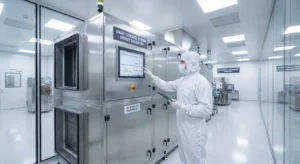
A cleanroom system must control the movement of air between rooms as well as the cleanliness of the air inside each room. Positive pressure is commonly used to prevent less-clean air from entering a cleaner area, while negative pressure may be required when the objective is to contain hazardous substances, infectious materials, or potent compounds. The pressure strategy must follow the facility’s contamination-control and occupational-safety requirements; positive pressure is not appropriate for every cleanroom, particularly where containment takes priority over product protection.
Temperature and relative humidity also affect product quality, personnel comfort, and process stability. Electronics manufacturing may require control of static electricity and moisture-sensitive materials, while pharmaceutical processes may need conditions that support product stability and microbiological control. Excessively dry air can increase electrostatic risks, whereas excessive humidity can contribute to condensation, material degradation, or microbial growth under suitable conditions. The system should therefore specify acceptable ranges, monitoring points, alarm thresholds, and corrective actions for each relevant parameter rather than rely on a single building-wide set point.
How to Design a Cleanroom Air Filtration System?
A successful design begins with a process assessment. Before specifying the necessary equipment, the project team should consider the following factors: the contaminants of concern; the sensitivity of the product; the number of personnel; the equipment heat load; the material-transfer routes; the cleaning procedures; and the expected operating schedule. These factors determine the target cleanroom classification, the number of filtration stages required, the supply air requirements, the pressure relationships, and whether particular workstations require local high-efficiency filtration or dedicated exhaust.
The next step is to calculate the airflow and environmental loads, and then to select the air-handling equipment, filters, ductwork, and control devices as an integrated system. Although air-change rate is often used during the preliminary design stage, it should not be treated as a universal guarantee of cleanliness. The required airflow depends on factors such as particle generation, room geometry, airflow pattern, filter arrangement, and process activity. Layout decisions should also minimise contamination pathways by separating personnel and material movement where practical, locating returns appropriately, and providing access for filter replacement without compromising the surrounding area.
Finally, the design should incorporate commissioning and future maintenance from the outset. Access to filters, differential-pressure measurement, sensor calibration, alarm management, replacement logistics, and safe maintenance procedures all affect the long-term performance of the installation. ISO 14644-4 addresses cleanroom design, construction, and start-up, while ISO 14644-3 provides methods for evaluating performance after installation.
Testing, Qualification and Routine Maintenance
Installing the equipment is only the beginning; the system must be tested to confirm that it performs as intended. Depending on the facility and applicable requirements, qualification may include airborne particle-count testing, installed filter-integrity testing, airflow-volume and velocity measurements, airflow visualization, pressure-differential checks, temperature and humidity verification, and recovery testing. Results should be documented against predefined acceptance criteria, with any failures investigated and corrected before the cleanroom is released for its intended use.
Maintenance should follow both the filter manufacturer’s instructions and the facility’s contamination-control plan. Common tasks include inspecting prefilters, monitoring pressure drop, replacing filters when required, checking seals and housings, verifying airflow and pressure sensors, reviewing alarm trends, and confirming that environmental controls remain within established limits. A rising filter pressure drop can indicate loading, but replacement decisions should consider the filter’s condition, system design, and validated operating limits rather than a single generic schedule.
For pharmaceutical and other regulated applications, maintenance and testing records form part of the evidence that the controlled environment remains suitable for production. FDA guidance on aseptic processing emphasizes HEPA-filtered air in critical product-exposure areas and the need to control airflow and environmental contamination. The exact qualification program, however, must reflect the process, regulatory framework, and risk assessment; particle testing alone cannot demonstrate microbiological control or sterility assurance.
Common Cleanroom Filtration Problems and How to Prevent Them
Even when the installed filters have the correct ratings, cleanroom performance can deteriorate. Common causes of this include damaged seals, filter bypass leakage, blocked return grilles, insufficient airflow, poorly positioned supply outlets, excessive personnel movement, and pressure imbalances caused by door operation. In some facilities, the main issue is not insufficient filtration capacity, but rather uncontrolled contamination introduced through materials, garments, equipment, or maintenance activities. Effective troubleshooting therefore requires an examination of the entire contamination control system, rather than replacing filters as a knee-jerk reaction.
A practical approach is to establish baseline performance during commissioning and compare routine monitoring results against this. If particle counts rise unexpectedly, investigate recent process changes, cleaning practices, personnel activity, airflow balance, filter integrity, and room-pressure trends. If energy consumption increases, check the pressure drop of the filters, the operation of the fan, the control settings, and the airflow demand before assuming that the filters alone are responsible. Documented trend analysis makes it easier to distinguish normal filter loading from genuine system faults and helps to prevent the need for repeated corrective work.
Cleanroom System FAQs
- ¿Qué es un sistema de sala limpia?
A cleanroom system is an integrated environmental-control installation designed to limit airborne particles and other contaminants within a controlled space. It combines high-efficiency filtration, HVAC equipment, airflow management, pressure control, and monitoring to meet the requirements of a specific process.
- Which filters are used in cleanroom systems?
HEPA filters are widely used in cleanrooms requiring high-efficiency particle removal, while ULPA filters are selected for applications that need even higher filtration performance. The correct choice depends on the required cleanliness level, airflow resistance, system design, and operating cost.
- ¿Cuál es la diferencia entre los filtros HEPA y ULPA?
HEPA and ULPA filters differ in their defined filtration-performance requirements and intended applications. ULPA filters can provide higher particle-removal performance, but they are not automatically the best choice for every cleanroom because airflow resistance and system compatibility also matter.
- How is a cleanroom classified?
Cleanrooms are commonly classified according to airborne particle concentration under ISO 14644-1. The required ISO class depends on the manufacturing process, product sensitivity, and contamination-control requirements.
- How often should cleanroom HEPA filters be replaced?
There is no universal replacement interval because service life depends on particle loading, operating conditions, filter integrity, and the manufacturer’s recommendations. Facilities should use pressure-drop trends, inspection results, integrity testing, and documented maintenance criteria to determine when replacement is necessary.
- How do you verify cleanroom air filtration performance?
Verification may include particle-count testing, filter-integrity testing, airflow measurements, pressure-differential checks, and environmental monitoring. ISO 14644-3 provides recognized test methods, while regulated facilities may require additional qualification and contamination-control evidence appropriate to their processes.
Conclusion
The effectiveness of a cleanroom air filtration system depends on the coordinated performance of filters, air-handling equipment, airflow distribution, pressure control, environmental monitoring, and maintenance procedures. While HEPA and ULPA filters are important components, the cleanliness of the finished environment ultimately depends on how effectively the entire system prevents contamination, maintains stable operating conditions, and performs under real production conditions. Facility owners can improve contamination control while balancing energy consumption, reliability, and lifecycle costs by applying the ISO 14644 framework, selecting equipment according to process-specific requirements, and establishing documented commissioning and maintenance procedures. The most effective cleanroom design is not necessarily the one with the highest filter rating or the greatest airflow: it is the one that consistently meets its defined cleanliness and process requirements throughout its operating life.


