
In cleanroom engineering, short acronyms often carry a great deal of practical meaning, and FFU is one of the most important examples. If you work in semiconductor manufacturing, pharmaceutical production, laboratory construction, medical device assembly, food processing, or precision electronics, you will come across the term FFU whenever the topics of contamination control, filtered airflow, or modular cleanroom design are discussed. Yet many buyers, project engineers, and facility managers still ask the same questions: What does FFU stand for? How does an FFU work? And when should a cleanroom use FFUs instead of another air delivery solution?
The short answer is straightforward: FFU stands for Fan Filter Unit. In practice, however, an FFU is much more than just a fan attached to a filter. It is a compact air purification device that helps to determine the cleanroom system’s cleanliness performance, airflow stability, energy consumption, noise level, maintenance frequency, and long-term flexibility. Companies planning a new cleanroom or upgrading an existing one must understand FFU design because the right unit can improve airflow balance, simplify installation, and reduce operating costs over time.
What Does FFU Stand For?
FFU stands for ‘fan filter unit’. The name describes the device quite accurately:
A fan is a motor-driven impeller or blower that draws air into the unit and pushes it through the filter media.
A filter is usually a HEPA or ULPA filter that captures particles before the air enters the clean space.
A unit is a self-contained module designed for ceiling grids, clean benches, clean booths, walkable ceilings, or process enclosures.
Therefore, a fan filter unit is a motorised filtration module that provides filtered supply air directly where cleanliness control is needed. In many clean rooms, FFUs are mounted across the ceiling and operate as distributed terminal air supply points. Rather than depending entirely on long duct runs from a central air-handling system, the FFU performs the final stage of air movement and filtration close to the clean zone itself.
This modular arrangement is one of the reasons why FFUs have become so common. They facilitate the scaling of cleanrooms, the addition of local clean zones, the replacement of individual units, and the fine-tuning of airflow in different parts of a facility. In other words, the FFU is not just a filtration product, but also a cleanroom airflow strategy.
What Is an FFU?
An FFU (Fan Filter Unit) is a ceiling- or equipment-mounted air purification device that combines three core functions in one housing:
- Air intake and circulation;
- Particle filtration;
- Controlled clean air delivery.
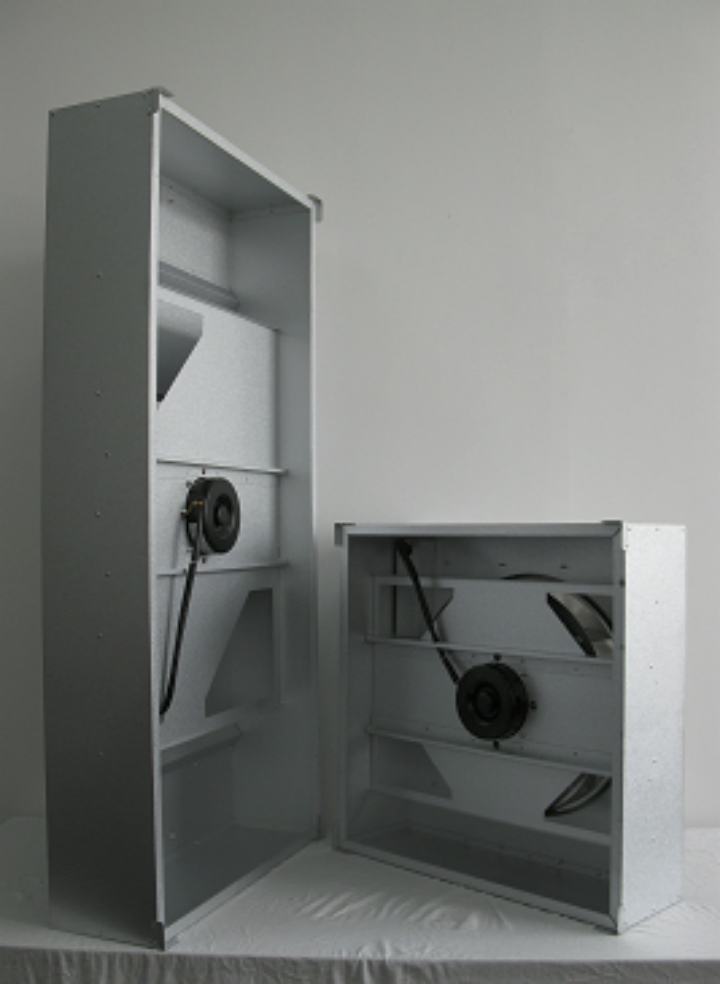
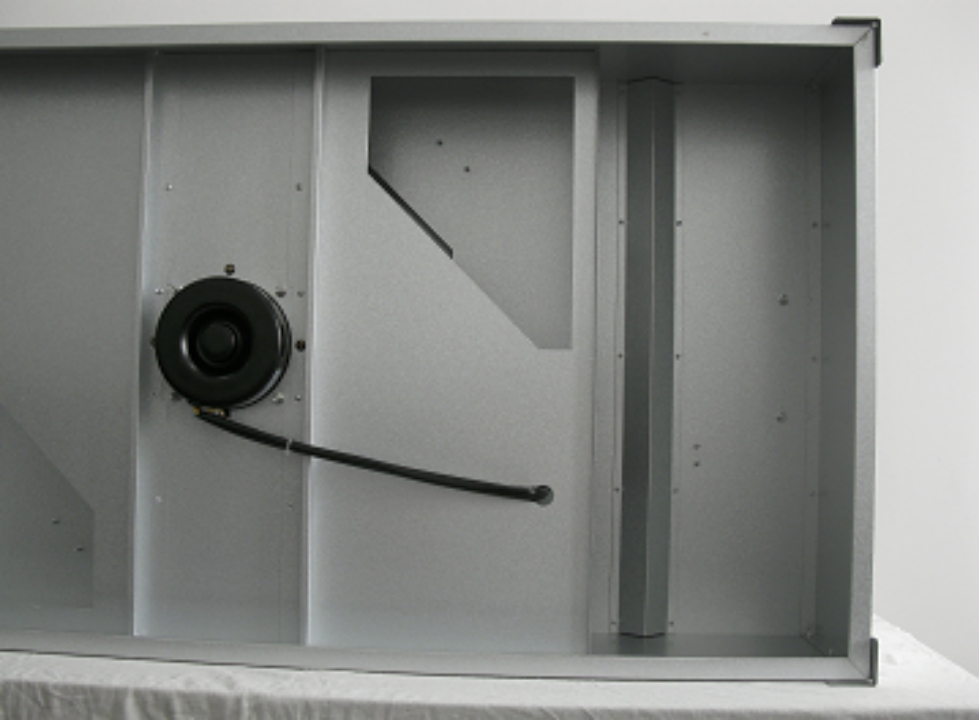
The unit typically consists of a metal housing, a motor, a fan wheel or impeller, an electrical control system, and a terminal filter. Depending on the design, it may also include a pre-filter, a speed controller, a vibration isolation structure, and a communication interface for centralised monitoring.
During operation, the FFU draws air from the room plenum or the surrounding environment. This air is then passed through a high-efficiency filter before being pushed downward into the clean area below. This creates a stable flow of filtered air over work surfaces, equipment, or production lines. The result is reduced particle concentration and improved environmental control in the critical zone.
Unlike a simple air purifier, an FFU is designed for engineering integration. It is built to operate continuously in demanding industrial settings and to support target cleanliness classes under cleanroom standards. FFUs are therefore common in:
- Semiconductor fabs
- LCD/OLED and electronics assembly plants
- Pharmaceutical cleanrooms
- Medical device production areas
- Hospital sterile compounding zones
- Optical and precision manufacturing workshops
- Food and beverage hygiene-controlled packaging lines
- Laboratory clean benches and biosafety support spaces
Why FFUs Matter in Cleanroom Design?
Cleanrooms are not judged solely on how much air they move; their performance in controlling particles is also taken into account. Even if a room has strong ventilation, it can still fail cleanliness requirements if the airflow pattern is unstable, the filtration is inadequate, or the clean air is not delivered effectively to the critical area. FFUs solve this problem by placing high-efficiency, fan-powered filtration directly at the point where clean air enters the space.
This is important for several reasons.
Firstly, distributed FFUs help to create a more uniform airflow across the ceiling. Rather than relying on a few large ducted supply points, the cleanroom can use multiple FFUs to distribute filtered air more evenly across process zones. Secondly, FFUs improve flexibility. A facility can add units as production expands or increase unit density over a higher-grade process area without having to redesign the entire HVAC system. Thirdly, maintenance becomes more localised. If one FFU requires servicing, it can often be isolated and replaced without shutting down the entire cleanroom air supply system.
For industries with strict yield and contamination requirements, these advantages are significant. Even a small improvement in particle control can result in fewer product defects, less rework, and more consistent compliance with cleanroom validation targets.
How Does an FFU Work?
The working principle of an FFU is relatively simple, but its performance depends on how efficiently each stage is executed. In most cleanroom applications, the unit works in a continuous cycle:
-
Air intake
The FFU draws air into the housing from the return air plenum, interstitial ceiling space, or surrounding room environment. In a recirculating cleanroom system, this air has already passed through the room and is being reused after re-filtration. In localized clean booths or stand-alone enclosures, the unit may recirculate the air within that enclosed space.
-
Fan-driven airflow generation
A built-in motor drives the fan, which creates the pressure needed to move air through the system. This is a crucial difference between an FFU and a passive terminal HEPA box. Because the FFU has its own fan, it does not rely entirely on static pressure from a central air-handling unit. That gives the system greater independence and makes it easier to maintain airflow at the local level.
-
Particle filtration
The air is forced through a HEPA or ULPA filter mounted in the unit. The filter captures fine particles such as dust, aerosols, and process contaminants before the air enters the clean zone. The filter is the heart of the FFU because it determines the actual cleanliness performance of the air being supplied.
-
Clean air discharge
After filtration, the FFU discharges clean air downward into the workspace. In many cleanrooms, the goal is to produce a vertical unidirectional or quasi-laminar airflow pattern. This downward stream helps sweep particles away from product surfaces and directs them toward low-wall returns or floor-level return grilles, depending on the cleanroom layout.
-
Continuous recirculation
The discharged air moves through the room, picks up particles generated by people, equipment, or process activity, and then returns to the plenum or return path, where it can be drawn into the FFU again. This continuous circulation is what allows the cleanroom to maintain a controlled particle concentration over time rather than simply delivering one burst of clean air.
Main Components of an FFU
Although FFUs vary by manufacturer and application, most units share a similar component structure. Understanding these components helps buyers evaluate quality, performance, and long-term maintenance needs.
-
FFU housing
The housing is usually made from galvanized steel, stainless steel, or aluminum-zinc-coated steel. The housing must be rigid enough to support the filter and motor while minimizing vibration and leakage. In pharmaceutical or food-grade environments, smoother and more corrosion-resistant materials may be preferred.
-
Fan and motor assembly
The motor powers the impeller or blower wheel that moves air through the unit. Modern FFUs increasingly use EC motors (electronically commutated motors) because they offer lower energy consumption, more precise speed control, and better long-term efficiency than older AC motor designs. Motor quality strongly affects noise, power draw, and service life.
-
HEPA or ULPA filter
This is the core filtration stage. A HEPA filter is typically used when high-efficiency particulate removal is required for most standard cleanroom classes, while ULPA filters are used in more demanding environments where even finer particle control is necessary. Filter selection depends on cleanliness targets, airflow resistance, and process sensitivity.
-
Control system
Many FFUs include a speed controller, an on/off interface, and a communication option for centralized monitoring. In larger cleanrooms, hundreds of FFUs may be connected to a supervisory control system so facility teams can monitor airflow, power consumption, filter status, and alarm conditions from one interface.
-
Protective screen or diffuser
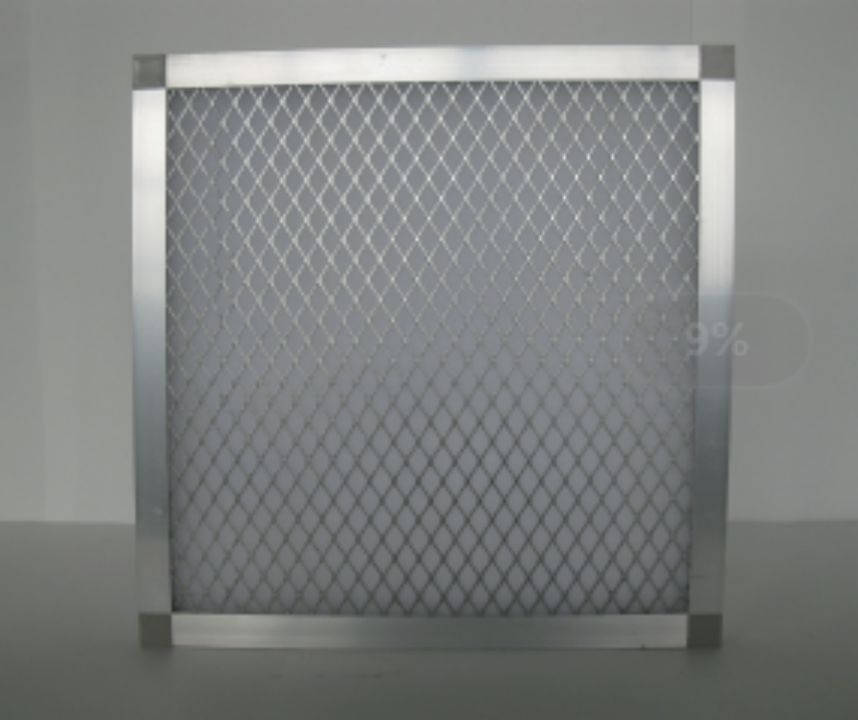
Some FFUs include a diffuser or protective screen at the discharge face. This helps improve airflow uniformity, protects the filter face, and can reduce turbulence depending on the design.
FFU vs Traditional Ducted HEPA Box
A common question in cleanroom projects is whether to use FFUs or a centralized ducted system with terminal HEPA boxes. The answer depends on project scale, budget, flexibility needs, and energy strategy. In general, the difference is that an FFU contains its own fan, while a terminal HEPA box relies on air pressure from the central HVAC system.
FFU vs Ducted HEPA Box
| Artículo | FFU (Fan Filter Unit) | Ducted HEPA Box |
| Air movement source | Built-in fan and motor | Central AHU/static pressure |
| Installation flexibility | High, modular and scalable | Lower; depends on duct layout |
| Local airflow adjustment | Easy to control by the unit | Usually controlled centrally |
| Maintenance approach | Individual unit maintenance | Centralized air system maintenance |
| Suitable for retrofits | Very good | Often more complex |
| Initial system architecture | Distributed | Centralized |
| Typical use | Modular cleanrooms, process zones, upgrades | Large integrated HVAC cleanrooms |
In practice, FFUs are often preferred in projects where modularity, phased expansion, or local airflow tuning are important. Ducted HEPA boxes may still be attractive in some large centralized facilities, but FFUs offer a strong advantage when flexibility and decentralized control are priorities.
Common Types of FFU by Filter Grade and Application
Not all FFUs are identical. They can be categorized by filter efficiency, control method, housing size, motor technology, and intended application. From a buyer’s perspective, the most useful classification is usually by application type and filtration level.
-
Standard HEPA FFU
This is the most common type used in electronics assembly, medical device manufacturing, general ISO cleanrooms, and clean booths. It provides high-efficiency particle control suitable for a wide range of industrial environments.
-
ULPA FFU
ULPA FFUs are designed for more stringent contamination control environments, especially where ultra-fine particle removal is required. Semiconductor and advanced microelectronics applications are typical examples.
-
DC / EC motor energy-saving FFU
These units use more efficient electronically controlled motors. They are increasingly preferred in large cleanrooms because energy consumption from hundreds of FFUs can become a major operating cost. An efficient motor design can therefore have a substantial impact on total lifecycle cost.
-
Low-profile FFU
Low-profile units are used where ceiling void space is limited. This can be important in retrofit cleanrooms, mobile clean booths, or facilities with restricted interstitial height.
Where Are FFUs Used?
The reason FFUs are so widely used is that they solve a problem common to many industries: how to deliver clean, controlled air exactly where sensitive work happens. Although the design principle is the same, the operating priorities differ by sector.
-
Semiconductor and microelectronics manufacturing
This is one of the most demanding FFU application areas. Wafer fabrication, chip packaging, display manufacturing, and advanced electronics assembly all require strict airborne particle control because microscopic contaminants can damage surfaces, interfere with photolithography, or reduce product yield. In these environments, FFUs are often installed in dense ceiling arrays to maintain stable cleanroom classes and localized high-cleanliness process zones.
-
Pharmaceutical and biotechnology facilities
In pharmaceutical production, sterility, particulate control, and process segregation are central concerns. FFUs are commonly used in cleanrooms for formulation, filling, packaging, and sterile processing, as well as in laboratory support spaces. Their modularity is especially useful in facilities that need to create different cleanliness zones or upgrade production areas without rebuilding the full HVAC infrastructure.
-
Producción de dispositivos médicos
Medical devices such as catheters, implantable products, surgical kits, diagnostic cartridges, and precision-molded components often require controlled assembly environments. FFUs help create clean work zones where particulate contamination must be minimized to protect product quality and regulatory compliance.
-
Food, beverage, and hygiene-sensitive packaging
Although food-grade environments do not always require the same ISO classification levels as semiconductor or pharmaceutical cleanrooms, many packaging and processing operations still benefit from controlled airflow and localized clean zones. FFUs are often used above filling lines, hygienic packaging stations, and high-value process steps where airborne contamination must be reduced.
-
Laboratories, clean benches, and modular clean booths
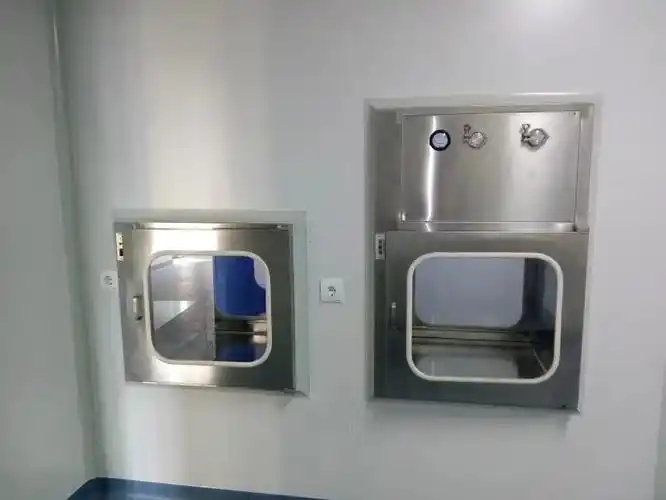
FFUs are also widely used outside full cleanroom ceilings. They are common in clean benches, laminar flow workstations, pass boxes, weighing booths, and modular clean enclosures. In these cases, the FFU functions as the core airflow engine of a smaller controlled environment rather than part of a whole-room system.
How to Select the Right FFU?
Selecting an FFU should begin with the cleanliness requirement of the space, not with the catalog size of the unit. A good FFU matches the cleanroom’s airflow strategy, contamination risk, ceiling layout, maintenance approach, and operating cost target. In practice, the following selection logic is the most useful.
-
Start with the cleanliness target
The required ISO class or internal cleanliness specification will influence the number of FFUs, filter grade, airflow velocity, and ceiling coverage ratio. Higher cleanliness targets usually demand more tightly controlled airflow and more consistent air distribution across the room.
-
Match the unit to the cleanroom layout
The ceiling grid, return air path, equipment height, process layout, and room geometry all affect FFU selection. A unit that works well in an open cleanroom may not be ideal for a narrow process corridor or a modular booth with low ceiling clearance.
-
Choose the right filter level
Not every application needs ULPA filtration. Over-specifying the filter can increase pressure drop and operating cost without delivering a meaningful process benefit. The right choice depends on contamination sensitivity, validation requirements, and the target cleanliness level of the process.
-
Consider energy use over the full lifecycle
A lower-priced FFU can become more expensive if it consumes more power year after year. For large projects, it is worth comparing motor type, rated power, controllability, and expected annual energy use before finalizing a purchase decision.
-
Evaluate serviceability and spare parts support
Filter replacement, motor service, control compatibility, and supplier support all matter in real-world operations. A technically good FFU can still become a poor investment if replacement parts are hard to source or if maintenance requires excessive downtime.
Practical FFU Selection Checklist
| Selection Factor | What to Check | Why It Matters |
| Cleanliness target | ISO class/process cleanliness level | Determines airflow density and filter requirements |
| Filter grade | HEPA or ULPA, pressure drop, sealing quality | Directly affects contamination control |
| Motor type | EC / DC / AC motor, efficiency, controllability | Influences energy use, noise, and stability |
| Airflow capacity | m³/h, CFM, face velocity uniformity | Determines whether the unit can support the room airflow design |
| Housing material | Galvanized steel, stainless steel, corrosion resistance | Important for hygiene, durability, and application fit |
| Noise level | dB rating under operating condition | Affects operator comfort and production environment |
| Maintenance access | Filter change method, motor access, controls | Reduces service downtime and long-term operating burden |
| Supplier support | Technical documents, spare parts, customization | Important for lifecycle reliability and project execution |
FAQ About FFU
- What does FFU stand for in a cleanroom?
FFU stands for Fan Filter Unit. It is a self-contained clean air module that combines a fan and a high-efficiency filter to deliver purified air into a cleanroom or other controlled environment.
- How does an FFU work?
An FFU works by drawing air into the unit, pushing that air through a HEPA or ULPA filter, and discharging the filtered air into the clean zone below. This creates a controlled airflow pattern that helps remove airborne particles from the workspace.
- What is the difference between an FFU and a HEPA box?
The main difference is that an FFU has its own built-in fan, while a HEPA box relies on air pressure from a central HVAC system. FFUs, therefore, offer more local airflow control and are often easier to use in modular cleanroom designs.
- Where are FFUs commonly used?
FFUs are widely used in semiconductor plants, pharmaceutical cleanrooms, electronics manufacturing, medical device production, laboratories, clean booths, and other contamination-controlled spaces.
- Does every cleanroom need FFUs?
No. Some cleanrooms use centralized ducted systems with terminal HEPA filters instead of FFUs. The best solution depends on the project’s size, flexibility needs, airflow design, maintenance strategy, and budget.
- What should I look for when buying an FFU?
Key factors include filter grade, airflow capacity, motor efficiency, noise level, housing quality, control options, maintenance access, and supplier support. A lower initial price is not always the best value if energy consumption or maintenance costs are high.
Conclusion
When people ask, ‘What does FFU stand for?’, the answer is simple: FFU stands for Fan Filter Unit. However, in the context of cleanroom engineering, the importance of an FFU extends well beyond its name. It is one of the most important components of a modern contamination control system, combining airflow generation, high-efficiency filtration, and localised clean air delivery in a single, modular device.
An FFU works by drawing air into the unit, forcing it through a HEPA or ULPA filter, and discharging clean air into the controlled area below. This straightforward operating principle supports a variety of industrial objectives, including cleaner process zones, more consistent airflow, flexible cleanroom design, easier expansion, and improved contamination management. FFUs remain a practical solution wherever reliable filtered airflow is essential, whether the application is semiconductor fabrication, pharmaceutical processing, medical device assembly, laboratory work, or hygienic packaging.
The key for buyers and engineers is not just to understand the meaning of FFU, but also to understand how to choose the right one. Airflow stability, filter integrity, motor efficiency, noise levels, ease of maintenance, and supplier support all influence long-term performance. A well-selected FFU can improve cleanroom reliability and reduce lifecycle costs, whereas a poorly matched unit can cause airflow imbalances, lead to unnecessary energy use, and create maintenance issues. In that sense, FFU selection involves both cleanroom equipment and operational strategy.