
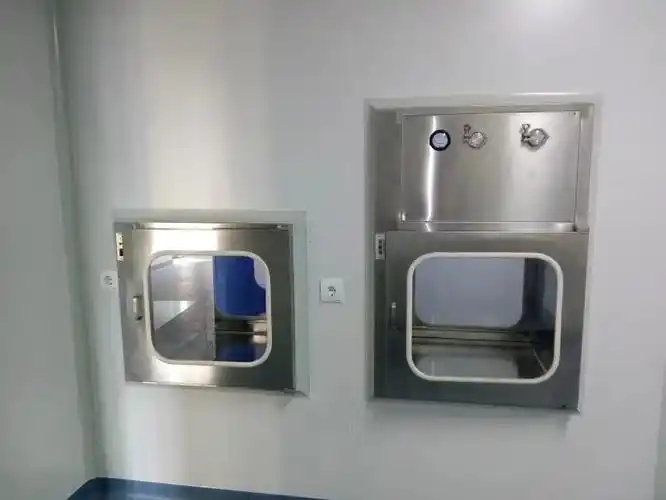
A pre-filter should generally be inspected monthly and replaced when the pressure drop reaches the final resistance recommended by the manufacturer, rather than being changed according to a fixed schedule. For many HVAC applications, this equates to approximately every 1–6 months, depending on factors such as dust loading, airflow, operating hours, filter type, and indoor or outdoor air quality. Both ASHRAE and Camfil emphasise condition-based replacement and pressure-drop monitoring over a universal replacement interval.
What Is a Pre-Filter and Why Does Replacement Frequency Matter?
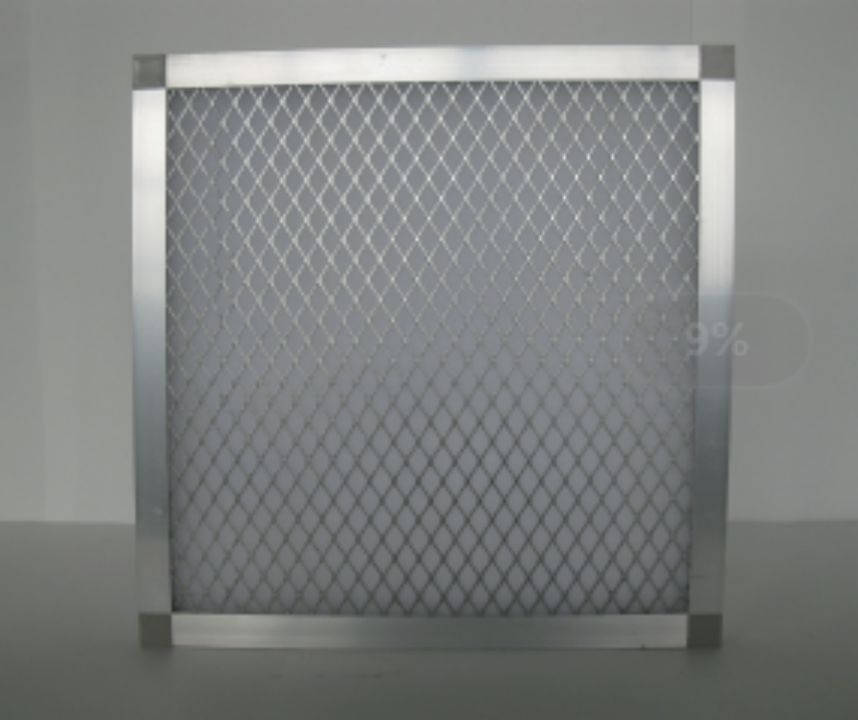
A pre-filter is the first stage of filtration installed upstream of a finer filter or sensitive HVAC component. Its main function is to capture larger dust, fibres, lint, hair, and other particulate matter before these contaminants reach downstream filters, coils, fans, heat exchangers, or higher-efficiency filtration stages, rather than to provide the highest particle-removal efficiency. ASHRAE describes prefiltration as an important means of protecting HVAC components and extending the functional service life of downstream fine-particle filters.
This makes the frequency of replacement more complicated than simply judging whether a filter “looks dirty”. A pre-filter gradually accumulates particles and, as loading increases, its resistance to airflow also increases. If it is replaced too early, usable filter capacity is wasted, and maintenance costs rise. Conversely, if it is left in service for too long, the increased pressure drop can reduce airflow, increase fan energy demand, affect HVAC performance, and potentially compromise the protection that the filtration system was designed to provide.
For this reason, the most useful answer to ‘How often should I change pre-filters?’ is not simply ‘every three months’. A better maintenance strategy involves consulting the filter manufacturer’s specifications, recording the clean pressure drop, monitoring loading during operation, and establishing an appropriate replacement threshold for the specific air handling system.
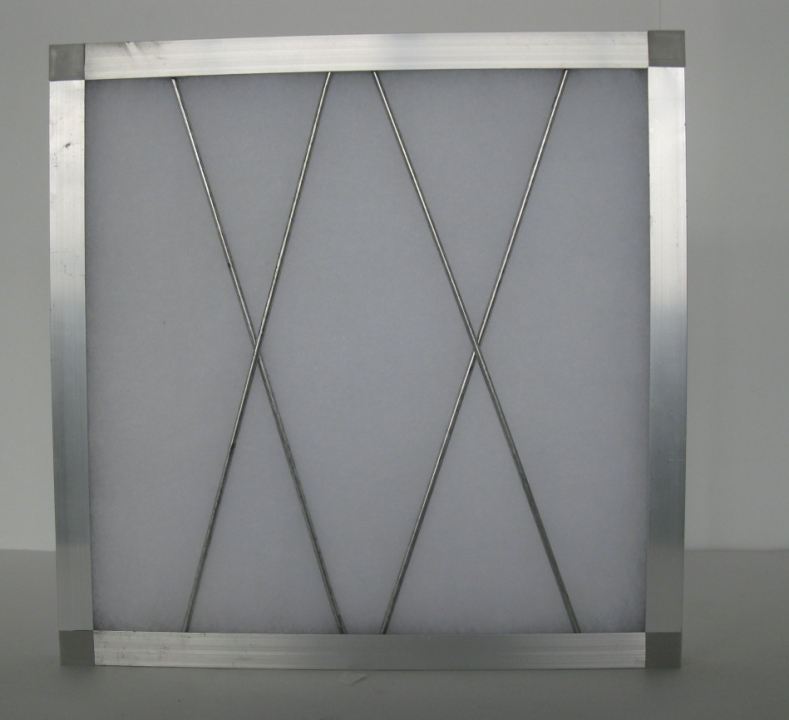
How Often Should a Pre-Filter Be Changed?
For a typical commercial HVAC application, a practical starting point is to inspect the pre-filter at least monthly and expect replacement somewhere between about 1 and 6 months, depending on the environment. Clean offices with relatively low particulate loading may allow longer service intervals, while manufacturing facilities, construction environments, warehouses, kitchens, dusty outdoor-air intakes, and high-occupancy buildings can require substantially more frequent replacement.
ASHRAE does not prescribe one universal calendar interval for every pre-filter application. Its guidance instead recognizes that filter-changing frequency varies with airflow quantity and contamination, while its air-cleaner guidance recommends using airflow resistance or a defined replacement schedule when pressure-drop monitoring is not available.
| Application or environment | Typical pre-filter inspection | Possible replacement range* | Main loading factor |
| Clean office / low dust | Monthly | 3–6+ months | Low particle concentration |
| Residential or light commercial HVAC | Monthly | 2–6 months | Occupancy, pets, outdoor air |
| Retail / high-occupancy building | Monthly | 1–3 months | People, lint, outdoor air |
| Warehouse/logistics facility | Every 2–4 weeks | 1–3 months | Dust and vehicle activity |
| Manufacturing environment | Weekly to monthly | Weeks to 3 months | Process dust and aerosols |
| Construction/renovation area | Weekly or more often | Days to weeks | Heavy dust loading |
| Kitchen / greasy exhaust-related system | Frequent inspection | Application-specific | Grease and particulate loading |
| High outdoor-pollution location | Monthly or more often | 1–3 months | Outdoor particulate concentration |
These are planning ranges rather than universal replacement rules. Actual replacement should follow the manufacturer’s specifications, measured pressure drop, filter condition, airflow requirements, and site operating conditions.
The difference between applications can be substantial. ASHRAE specifically notes that filter cleaning or replacement frequency varies with both airflow and local contamination, while its maintenance guidance recommends adapting preventive-maintenance frequency to field conditions rather than treating calendar intervals as universally applicable.
Why Pressure Drop Is Better Than a Calendar Schedule?
The most technically sound way to determine when a pre-filter needs replacing is to monitor the differential pressure, or pressure drop, across the filter. A clean filter has relatively low initial resistance, but as dust accumulates on the filter medium, the resistance increases, and the pressure difference across the filter becomes a measurable indicator of loading.
ASHRAE recommends using permanent airflow-resistance indicators to help maintenance personnel identify when filters reach their final pressure drop. Where pressure-drop indicators are not practical, ASHRAE recommends establishing a filter replacement schedule to prevent filters from remaining in service once they have reached their loading capacity.
Camfil’s technical guidance provides a useful example of this condition-based approach. Its discussion of EN 13053:2019 states that coarse pre-filters can be considered for replacement when the pressure drop reaches the initial pressure drop plus 50 Pa, or three times the initial pressure drop, whichever is lower. For ISO ePM-rated pre-filters, the corresponding increase is 100 Pa, or three times the initial pressure drop, whichever is lower.
However, these values should not be applied indiscriminately to every HVAC system. The final pressure drop limit must remain compatible with the fan curve, airflow requirements, filter housing, downstream equipment, room pressure requirements and the manufacturer’s specifications.
In practice, facility managers can establish a much more reliable maintenance programme by recording the pressure drop of a new pre-filter, checking it periodically under comparable airflow conditions, and replacing the filter when the established limit is reached. This transforms the process of replacing filters from guesswork to a measurable maintenance decision.
What Determines How Quickly a Pre-Filter Gets Dirty?
Several variables determine how quickly a pre-filter reaches its loading limit, and the biggest one is usually the amount and type of particulate entering the airstream. A facility located beside a construction site, industrial process, major roadway, agricultural operation, or dusty outdoor environment will generally load filters faster than a relatively clean office building.
- Airflow and operating hours
The more air a filter processes, the more particulate matter it potentially captures. A system operating continuously at high airflow can therefore load a pre-filter much faster than a smaller system that operates only several hours per day.
Operating hours should be considered alongside airflow because two filters of identical size can have very different service lives if one system operates 24/7 while another operates intermittently.
- Particle concentration
Outdoor air quality, indoor occupancy, construction work, manufacturing processes, packaging operations, textile fibers, wood dust, and other contaminants can dramatically change loading rates. Even seasonal changes can affect replacement frequency because pollen, wildfire smoke, agricultural dust, or winter heating conditions can alter particulate concentrations.
- Filter construction and efficiency
Not all pre-filters have the same dust-holding capacity. Media type, depth, pleat configuration, face area, efficiency, fiber structure, and filter design influence both initial resistance and how the filter loads during operation.
A higher-efficiency filter is not automatically a better pre-filter if the HVAC system cannot accommodate its pressure drop. ASHRAE warns that increasing filtration efficiency can increase pressure drop and potentially reduce airflow or increase fan energy consumption if the system has not been designed for the change.
- Filter size and face velocity
A larger filter area can reduce air velocity through the media and potentially improve dust-loading characteristics. Conversely, forcing excessive airflow through a small filter can increase resistance and may shorten practical service life.
This is why filter replacement cannot be separated from HVAC design. A filter that performs well at its intended airflow may behave very differently when the actual system airflow is significantly higher.
What Happens If You Do Not Change a Pre-Filter Often Enough?
The first consequence of an overloaded pre-filter is typically an increase in pressure drop. As resistance increases, the HVAC fan has to work harder to maintain airflow, and the system may eventually struggle to deliver the required volume of air.
In a conventional air-handling system, reduced airflow can impact heating and cooling performance, coil heat transfer, temperature control, and indoor air quality. In some applications, excessive filter resistance can also interfere with the important pressure relationships of cleanrooms, healthcare spaces, laboratories, and other controlled environments.
An overloaded pre-filter can also undermine the purpose of having multiple filtration stages. ASHRAE explains that prefiltration protects downstream fine-particle and gas-phase filters, while Camfil notes that loss of prefilter functionality can reduce protection for both downstream filters and HVAC components.
There is also an energy consideration. The more restrictive a filter becomes, the more pressure the fan must overcome, which can raise fan energy consumption. Therefore, the economic cost of an overdue prefilter is not limited to the price of the replacement filter, but can also include additional electricity costs, reduced system performance, increased loading on downstream filters, and greater maintenance risk.
What Happens If You Change Pre-Filters Too Frequently?
Replacing a pre-filter too early may seem like a harmless form of preventive maintenance, but excessive replacement can create its own problems. Every replacement consumes filter media, labor, transportation, storage space, disposal resources, and maintenance time.
More frequent maintenance also means more opportunities for installation errors. Poorly fitted filters, damaged frames, incorrect dimensions, gaps around the filter, or improperly closed access panels can create bypass air that reduces the effectiveness of the entire filtration system.
Camfil’s research specifically highlights this balance: replacing prefilters regularly is important for protecting downstream filters and HVAC equipment, but replacing them several times a year without considering actual service life can undermine the economic benefits of the prefiltration strategy.
The goal should therefore be optimal replacement, not maximum replacement frequency. A well-designed maintenance program uses inspection and pressure-drop data to extract as much useful filter life as possible without allowing resistance or contamination to reach an unacceptable level.
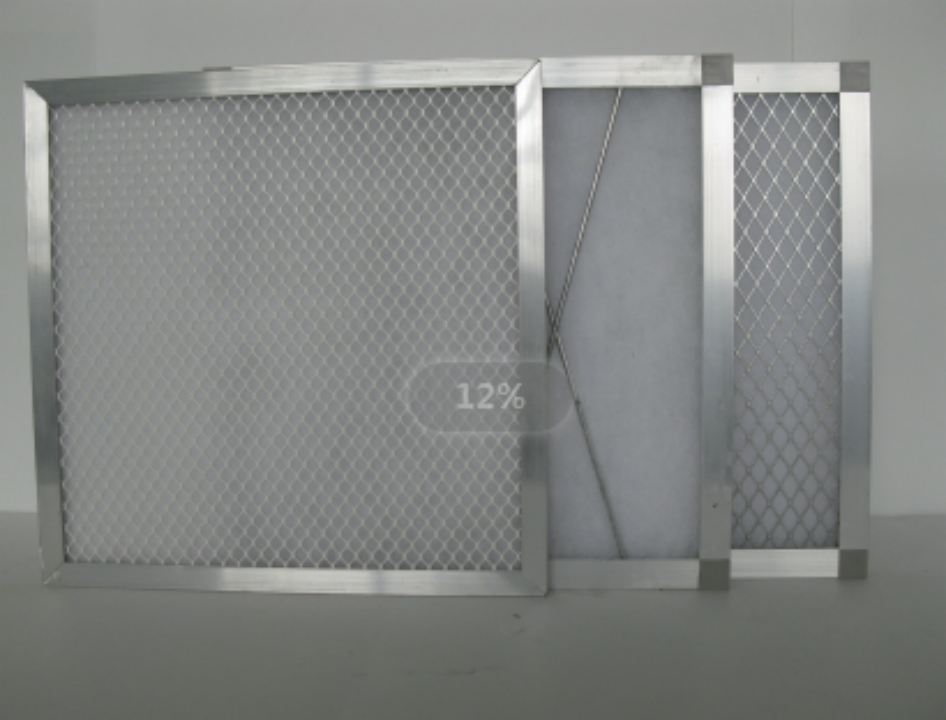
Signs That a Pre-Filter Needs to Be Changed
Although visual inspection remains useful, it should be considered alongside other criteria rather than as the only factor. For example, a filter can appear relatively clean while experiencing a significant pressure drop, and a visibly discoloured filter does not necessarily mean that it has reached the end of its useful life.
The most reliable warning signs are usually reduced airflow, increasing differential pressure, rising fan energy consumption, abnormal fan operating conditions, visible loading, or a maintenance alarm from the building management system. In systems with a pressure sensor, measured differential pressure provides a much stronger basis for replacement than colour alone.
Facility managers should also investigate sudden changes rather than simply replacing the filter. If a pre-filter becomes heavily loaded much faster than normal, this may be due to a construction project, a damaged intake louver, a change in the outdoor air rate, process emissions, a problem with the filter seal, or an abnormal dust source.
This kind of trend analysis can improve the entire HVAC maintenance programme. Rather than simply asking “Is the pre-filter dirty?”, technicians should ask “Why did the filter reach its loading threshold 40% faster than the previous replacement?” This question often reveals a system-level issue that would otherwise remain hidden.
How to Build a Better Pre-Filter Replacement Schedule?
A practical industrial or commercial program can be organized into five steps.
- Record the clean condition. When a new pre-filter is installed, record its model, dimensions, filter efficiency, installation date, operating airflow if known, and initial pressure drop.
- Establish an inspection interval. Begin with monthly inspections for ordinary commercial systems, then shorten the interval for dusty or high-load environments. ASHRAE recommends more frequent checking where airstreams contain heavier particulate loads.
- Measure pressure drop. Compare the current differential pressure with the manufacturer’s recommended final resistance or the engineered system limit. If no pressure-drop threshold is available, work with the HVAC designer or filter supplier to establish one.
- Track actual service life. Record how long each filter lasts before reaching the replacement threshold. After several cycles, the facility can establish a site-specific replacement pattern instead of relying on generic internet recommendations.
- Reassess after changes. Construction, occupancy changes, new production processes, altered outdoor-air rates, filter upgrades, and seasonal pollution events can all invalidate an old replacement schedule. The maintenance interval should therefore be treated as a living operating parameter.
This condition-based approach aligns closely with the broader maintenance philosophy described by ASHRAE: preventive maintenance can be scheduled by calendar or runtime, but task frequency should be based on manufacturer recommendations, industry standards, and actual field conditions.
Pre-Filter Replacement: Time-Based vs. Condition-Based Maintenance
For simple residential or small commercial systems without pressure monitoring, a calendar-based schedule can be practical. For large air-handling units, industrial ventilation systems, clean environments, laboratories, data centers, and other critical applications, pressure-drop-based monitoring provides much stronger control over maintenance decisions.
| Maintenance method | How it works | Advantages | Limitations | Best suited for |
| Calendar-based | Replace every fixed number of weeks or months | Simple and inexpensive | May replace too early or too late | Small systems |
| Visual inspection | Check media condition manually | Easy to implement | Subjective; does not quantify resistance | Basic maintenance |
| Runtime-based | Replace after a defined number of operating hours | Better than calendar time for variable schedules | Does not measure actual dust loading | Equipment with runtime monitoring |
| Pressure-drop-based | Replace at a defined differential pressure | Directly reflects filter loading | Requires gauge or sensor | Commercial/industrial HVAC |
| BMS-based | Use differential-pressure sensor and alarm | Automated and traceable | Higher installation cost | Large or critical facilities |
| Hybrid strategy | Combine schedule, inspection, and pressure drop | Most flexible | Requires disciplined records | Professional facility management |
The strongest strategy for most larger systems is a hybrid model: inspect on a regular schedule, monitor pressure drop where practical, follow the manufacturer’s final-resistance recommendation, and retain a calendar-based maximum interval as a safety control.
How Pre-Filters Protect More Expensive Filters?
One of the most important reasons for maintaining a pre-filter correctly is that its value extends beyond the filter itself. In a multistage filtration system, for example, the pre-filter absorbs some of the particulate matter that would otherwise reach the final filter.
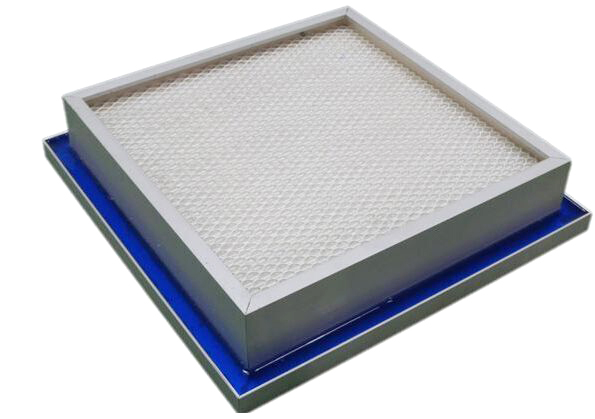
ASHRAE specifically states that pre-filtration can extend the service life of fine particle and gas phase filters. Furthermore, its guidance for systems using HEPA or ULPA filters recommends protecting these high-efficiency filters with pre-filters.
This establishes an economic relationship between the two filtration stages. Replacing a relatively inexpensive pre-filter at the right time can help to avoid the premature replacement of a much more expensive final filter. Conversely, an excessively restrictive pre-filter can waste energy and compromise airflow.
The optimum replacement point is therefore where filter cost, labour, energy consumption, downstream filter life, airflow requirements and equipment protection intersect. This is a much more useful concept for facility managers than the generic recommendation to replace the pre-filter every 90 days.
Does a Higher-Efficiency Pre-Filter Need to Be Changed More Often?
Not necessarily. Higher filtration efficiency can capture more particles, but actual service life depends on the filter’s dust-holding capacity, media design, face area, airflow, and contaminant concentration.
ASHRAE notes that more efficient filters generally create greater pressure drop, particularly when comparing different filter constructions, and recommends verifying that the HVAC system can accommodate a filtration upgrade before installation.
The important distinction is between filtration efficiency and loading capacity. A high-efficiency pre-filter with a large media area and appropriate design may provide excellent service life, while a smaller filter with similar efficiency may load quickly under the same airflow.
For this reason, buyers should evaluate initial resistance, recommended final resistance, dust-holding capacity, airflow, dimensions, efficiency rating, media construction, and downstream requirements rather than selecting a pre-filter based solely on its MERV or ISO classification.
FAQ: Pre-Filter Replacement
- How often should I change a pre-filter?
Most commercial pre-filters should be inspected monthly and may need replacement every 1–6 months depending on dust loading and operating conditions. The manufacturer’s pressure-drop limit is more reliable than a fixed calendar interval.
- Can I wash or clean a pre-filter instead of replacing it?
Some pre-filters are designed to be washable or reusable, while disposable filter media should not be washed unless the manufacturer specifically permits it. Always follow the filter manufacturer’s cleaning instructions because improper cleaning can damage the media or reduce filtration performance.
- What pressure drop means a pre-filter should be replaced?
There is no single pressure-drop value that applies to every pre-filter and HVAC system. Camfil cites EN 13053:2019-based guidance of initial pressure drop plus 50 Pa for coarse filters or plus 100 Pa for ISO ePM filters, subject to the applicable three-times-initial-pressure limit.
- What happens if I don’t replace my pre-filter?
A heavily loaded pre-filter can increase airflow resistance, reduce system airflow, raise fan energy demand, and shorten the life of downstream filters. In critical systems, excessive pressure drop can also interfere with required room-pressure or ventilation conditions.
- Does a pre-filter extend the life of a HEPA filter?
Yes, a properly selected pre-filter can capture larger particulates before they reach the HEPA stage and therefore reduce its loading rate. ASHRAE specifically recommends protecting HEPA and ULPA filters with prefilters.
- Is changing a pre-filter every three months a good rule?
Three months can be a reasonable starting point for some commercial systems, but it should not be treated as a universal requirement. A cleaner facility may need fewer changes, while a dusty industrial environment may require replacement much sooner.
Conclusion
The best answer to ‘How often should I change pre-filters?’ is when the filter reaches its loading limit, rather than after a set number of months. For many facilities, a useful starting framework is to inspect the filters monthly and replace them after roughly 1–6 months, but the final schedule should be determined by pressure-drop monitoring, manufacturer recommendations, airflow requirements, and actual particulate loading.
A well-managed pre-filter does more than just remove visible dust. It also helps to protect coils, fans, downstream fine filters, HEPA filters, and other HVAC components, all the while balancing filtration performance, energy consumption, maintenance labour, and filter cost. ASHRAE’s guidance and Camfil’s technical analysis both support a condition-based approach, in which differential pressure is a key indicator of when replacement is both technically and economically justified.
The most effective long-term strategy for commercial and industrial facilities is therefore to measure, record and optimise. This involves establishing the clean pressure drop, defining an acceptable final resistance, monitoring the filter at regular intervals, and adjusting the replacement frequency when there are changes in building use, outdoor air quality, production conditions, or HVAC operation. This creates a site-specific maintenance programme that is more accurate, economical, and defensible than any generic ‘change every three months’ rule.